
Teeth Grinding at Night: Night Guards and What Else Works

Do you hold your teeth at night without realizing it?
Mâche tensioned upon awakening, painful temples, teeth that wear out or become sensitive: bruxism acts at night, without you remembering it. It is your people, or your dentist, who often spot him first. In Paris, Dr Solène Vo Quang identifies the origin of the tightness, evaluates the wear already installed, and then builds with you the most suitable support.
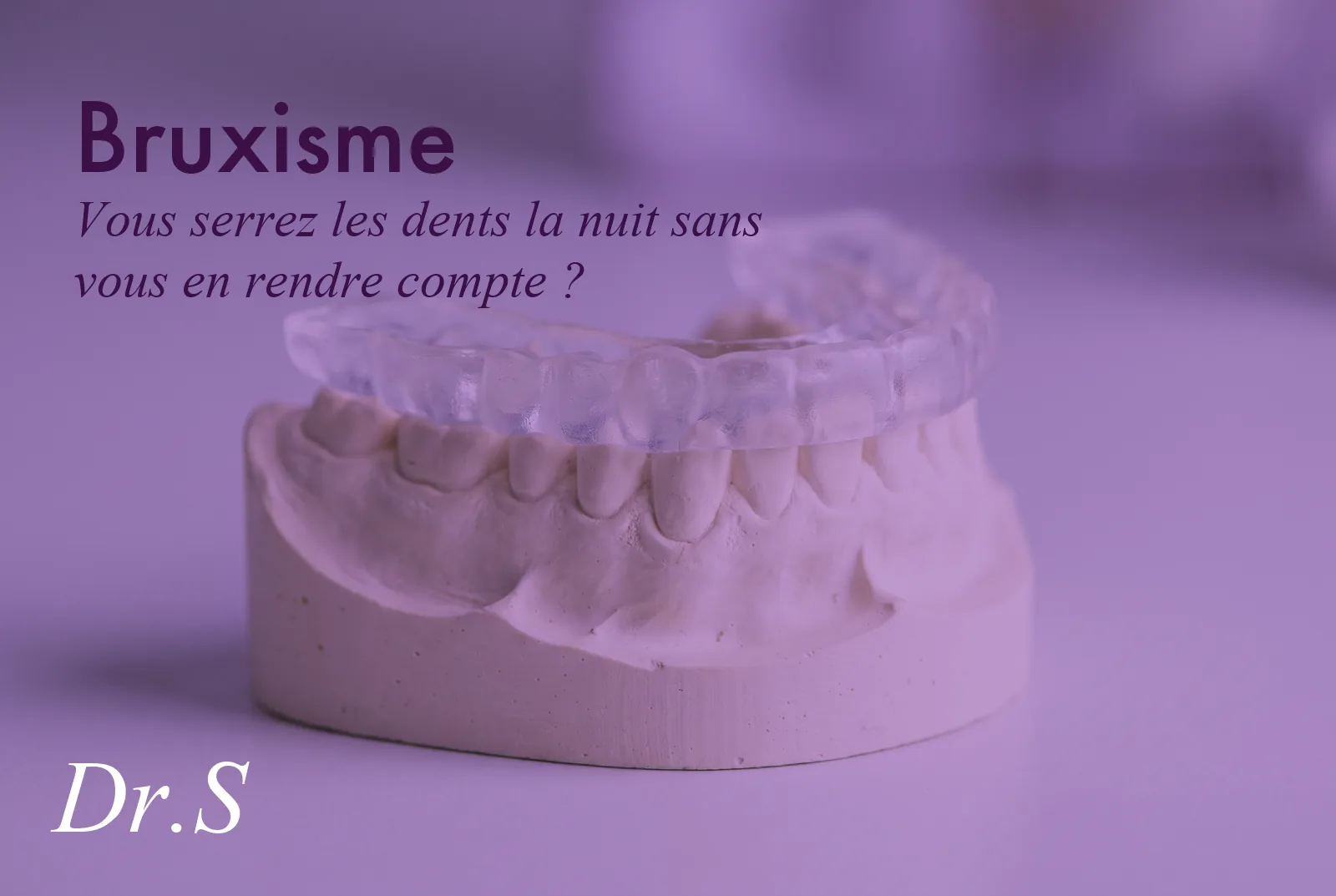
When the jaw works all night
bruxism is an involuntary muscle activity: the jaw tightens or rubs during sleep, sometimes several hundred times per night. You don't perceive it at the moment, but the muscles, joints and enamel collect each episode.
Night clenching
Grinding audible by your spouse, or silencing silent but permanent. In both cases, the jaw never really relaxes during the night.
Painful jaw on awakening
Tension in front of the ears, difficulty in opening large mouth in the morning, cracks at chewing: the temporo-mandibular joint signals overload.
Teeth that wear out
Flattening edges, cracking enamel, hot and cold sensitivity, restorations that break repeatedly. Wear is slow, but it does not repair itself.
Remote signs
Headache on awakening, tension in neck and shoulders, tinnitus. These symptoms appear foreign to the mouth and often delay diagnosis.
Let's be honest: bruxism isn't just a tooth grin.
It's a real functional disorder, often related to stress, that can damage your teeth, disrupt your sleep... and your quality of life.
I'm Dr. Solène Vo Quang, oral surgeon in Paris.
Every week, I receive patients who arrive exhausted, worried, sometimes convinced that
And I understand them.
bruxism is a message from the body.
Our job is to understand its origin and to relieve it sustainably.
What is bruxism?
Definition of night bruxism
bruxism is an involuntary movement of jaws.
Most often: during sleep, without you being aware of it.
There are two events:
- Grinding (a strident noise, sometimes audible by surrounding)
- tightness strong, silent, but very tiring for muscles
In some patients, both coexist, causing tension, morning fatigue and premature tooth wear.
Difference between tightening and grinding
I distinguish them systematically in consultation, because they do not have the same origin or evolution.
- Grinding: a repetitive movement of friction.
- Tightening: a prolonged contraction, invisible but powerful, often related to anxiety.
The precise diagnosis makes it possible to adapt the treatment.
You're not a general case. You are a person, with a experience, a stress, a unique rhythm of life.
The main causes of Brussels
Stress and anxiety: silent motors
In 70% of cases, bruxism is an unconscious response to stress.
Our nervous system contracts the jaw as if it was dropping tension elsewhere.
And let's be honest:
no gutter will replace work on mental load, if stress is the starting point.
I see it every week: exams, work overload, sleep disorders...
Buxism episodes always increase as life accelerates.
Other factors: malocclusion, medication, sleep disorders
Although stress dominates, other causes exist:
- bad occlusion: teeth do not fit → micro-trauma
- side effects of certain medicines (antidepressants, stimulants)
- sleep apnea or persistent insomnia
This is why I stress a global assessment, never a standardized treatment.
Symptoms and consequences for oral health
Mandibulal pain and headache
The body is not lying.
The symptoms of bruxism are often very eloquent:
- pain in the temporo-mandibular joint (ATM)
- headache when waking up
- tension in temples, cheeks or neck
- Muscle fatigue in the morning
These signs must never be ignored: they are warning signals.
Premature use of teeth
Prolonged grinding can change your teeth' anatomy in a few months:
- cracks
- hypersensitivity
- loss of enamel
- flattening of dental tips
- general vulnerability
I often say it again:
rebuilding a worn tooth is always more expensive than preventing.
How to diagnose bruxism?
Clinical Consultation and Questionnaire
It all starts in the firm.
- observation of dental wear and tear
- occlusion analysis
- questions about sleep, stress, night habits
- muscle evaluation (ATM, masseters, temporal)
This first step is often sufficient to establish a reliable diagnosis.
Sleep recording and additional examinations
For complex cases:
- polysomnography (sleep study)
- muscle tests
- X-rays if suspicion of joint disorder
The objective is simple: identify the origin to offer a suitable treatment.
Effective treatment and care
Customized dental gutters
The gutter remains the reference treatment.
It:
- Protect your teeth
- reduces muscle strength
- relief of joint
- improves sleep quality
But let's be honest:
a gutter does not cure the cause, it protects the consequences.
Therapeutic approach and stress management
In forms related to anxiety, I recommend:
- slow breathing exercises (5 minutes per night)
- cardiac consistency
- behavioral therapy if necessary
- maxillofacial physiotherapy
- osteopathy in cases of persistent tension
Effective treatment is always comprehensive.
Prevent tooth-scratch at night
Sleep hygiene and relaxation
A few simple gestures change everything:
- Turn off screens 1 hour before bedtime
- dark room, fresh, silent
- facial relaxation exercises
- slow breathing before sleeping
Your sleep conditions your jaw.
Occlusal settings and professional monitoring
If your teeth close badly, an occlusion adjustment may be necessary.
- polishing of specific surfaces
- functional balancing
- recommended annual monitoring
This gesture seems mild, but it can drastically reduce micro-trauma.
Children's bruxism: what should we know?
Typical causes in younger children
In children, the causes are often:
- dental thrust
- school stress
- growth phases
- behaviour disorders
- family changes
The majority of cases disappear spontaneously.
When to consult a paediatric specialist
If:
- Grinding persists +3 months
- sleep is disturbed
- the language seems embarrassed
- teeth visibly wear out
Screening at age 6 is recommended.
Light on innovative treatment: botulinum toxin
Operation of botox injections
In some resistant cases, botox is useful:
- injection into masseters
- decreased muscle power
- relief in 3 to 7 days
- duration: 3-6 months
It's an effective treatment, but never isolated.
Benefits and limitations
Benefits:
- rapid decrease in pain
- sleep improvement
- visible muscle relaxation
Limitations:
- do not treat emotional cause
- must be accompanied by comprehensive monitoring
- requires an experienced practitioner
If you think you are suffering from bruxism, do not let the symptoms settle down.
A precise diagnosis changes everything: it avoids tooth wear, relieves muscles, and above all... Give you a real sleep.
What to remember
Four markers to protect your teeth and relieve your jaw
Identify bruxism
Grinding signalled by a relative, jaw strained upon awakening, teeth worn: these signals warrant examination.
Measuring wear
The clinical examination evaluates the wear of the enamel, the condition of the joints and muscle tension, beyond the feeling alone.
Protect and treat
Protective rubber, stress management, occlusion correction: the response depends on the cause and wear already present.
Moving forward together
Treating dentist, physiotherapist, oral surgeon: a coordinated path for tailor-made management.
Our guides on Brussels
Each situation has its own page. Find the one that fits yours.
Understanding
The gutter
In children
BOOK AN APPOINTMENT
Book an appointment with a stomatologist in Paris
A stomatologist assesses conditions that may require specialist care, including oral surgery, lesions of the mouth or tongue, sleep apnoea and complex wisdom teeth. This first consultation helps establish what is happening and discuss the next steps before any treatment decision.
We listen to you
Tell us about your pain, discomfort, concerns about a lesion or difficulty sleeping. You can raise any question during the consultation.
We examine the problem
A clinical examination, with imaging if needed, helps assess your situation.
A clear plan to take home
You leave with an explanation of the findings and, where appropriate, a treatment plan and written estimate. You can take time to consider the proposed care.
Choose an appointment
Appointments via Doctolib
FAQ : bruxism (teeth greasing)
Answer your questions

Let's be honest: most patients don't know.
What alerts are the signs of the morning: pain in the jawmusclefatigue at waking up frequently tender or worn headspartner who hears the creaking at nightIf you recognize yourself, it's not in your head.
It's a signal to listen to.
Yes.
And it's even the most common cause. When the mind is under pressure, the jaw muscles contract unconsciously, especially at night.
I see him every day:
exams, job overload, family tensions... and symptoms explode. But rest assured: it's not a lack of control.
It's a normal neurological reaction.
Unfortunately, yes.
Without care, the consequences can be important: premature wear of enamel microcracks or fractures cold/heavy joint pain (ATM)modification of the shape of the teethThis is not to worry, it is to avoid heavier repairs later.
Sometimes, in children.
Rarely in adults.Without treatment, episodes tend to: become more frequent increase in intensity further damage the teethBruxism is not a serious problem, but it is never annoyed.