
Bruxism in Children: Understanding It and Acting Promptly
I often see worried parents in consultation because their child grinds their teeth at night, sometimes loudly or repeatedly. This phenomenon, known as bruxism, can be surprising or even alarming, especially when it becomes a daily occurrence or is accompanied by pain. Yet it is not always pathological. Above all, it needs to be properly understood in order to avoid long-term consequences.
I am Dr Solène Vo Quang, an oral and maxillofacial surgeon in Paris, specialising in medicine and surgery of the mouth. In my practice at 7 rue Marbeau, 75016 Paris, I regularly care for children with bruxism. Most often, this care involves listening carefully to families, a thorough examination, and clear explanations of the possible causes and potential treatment approaches.
Bruxism in children: definition and types
Definition of childhood bruxism
Bruxism in children is an involuntary jaw activity, which manifests itself as teeth grinding or forceful clenching outside normal chewing. It can appear from early childhood, often around the age of 3 or 4, and sometimes even earlier in some children during sleep.
This phenomenon affects both primary (baby) teeth and permanent teeth as they emerge. The child is not aware of it. Parents are often the ones who notice the situation, especially at bedtime or on waking.
Night-time and daytime bruxism: what are the differences?
A distinction is made between night-time bruxism, which occurs during sleep and is often noticed because of grinding sounds heard at night, and daytime bruxism, which involves involuntary jaw clenching during the day. The latter may go unnoticed because it is silent, but it can sometimes lead to muscular fatigue or diffuse jaw discomfort.
In children, both forms can coexist. Each has its own characteristics and triggers, and will be assessed differently according to the clinical context and symptoms.
How do you know if your child grinds their teeth at night?
Signs that can be observed on waking
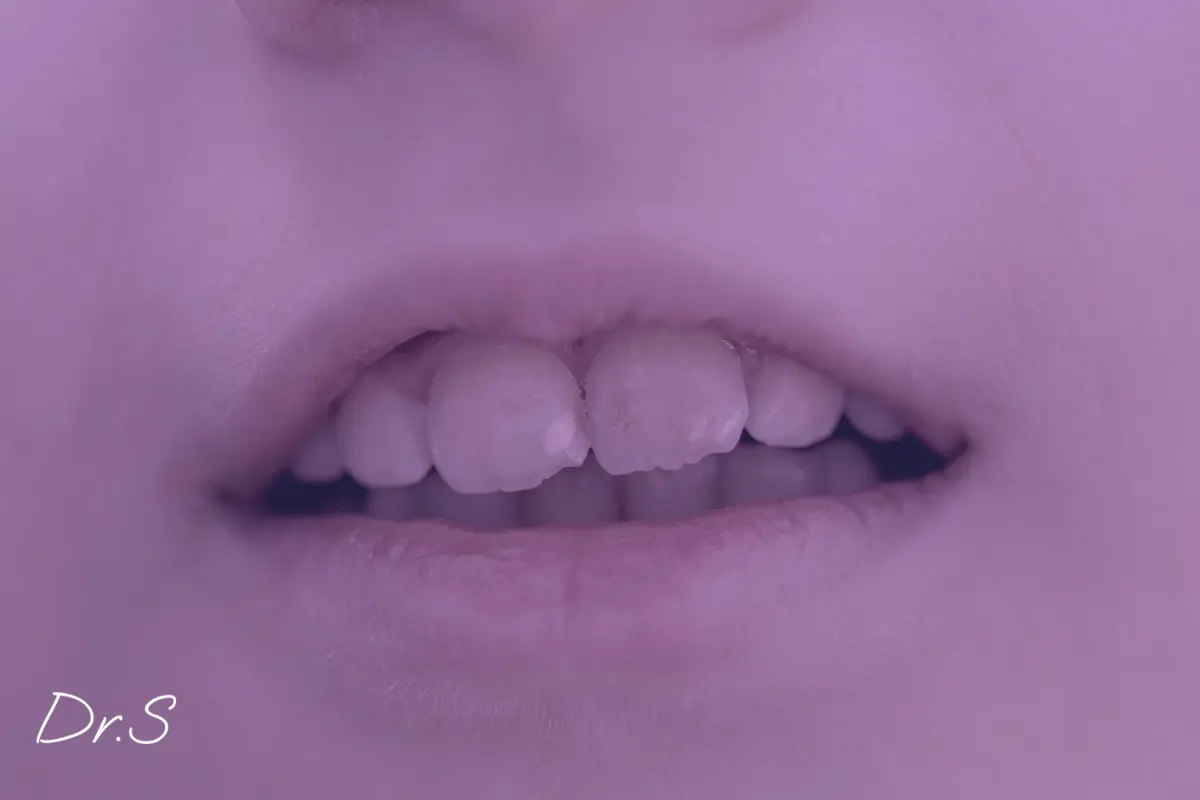
In some children, bruxism leaves visible signs from the first hours of the day. You may notice a tense or even painful jaw, difficulty waking up, headaches or unusual fatigue. In more marked cases, premature tooth wear may be observed, especially if the grinding is forceful and frequent.
I always recommend that parents pay close attention to these signs when they are repeated or persist over time, because they reflect an involuntary effort of the masticatory system during the night.
Behaviours during sleep
The signal most often reported is a rubbing or cracking sound from the teeth while the child is asleep. It may be a regular, sometimes intense sound that alerts parents. Other clues may appear: restless sleep, frequent awakenings or feeling unwell on waking.
These elements are not always constant, but when they recur regularly, they warrant expert assessment. This is generally when families come to see me.
Why does a child grind their teeth?
Stress, anxiety and other emotional factors
Childhood bruxism often has an emotional component. Moving house, starting school, family conflict or simply an overly busy day can create an invisible tension in a child during the day, which is then expressed at night through teeth grinding.
This mechanism is unconscious and not deliberate. The body releases an emotional load through the muscles of the face. Of course, not all stressed children grind their teeth, but there is a recognised link in the medical literature between childhood stress and night-time bruxism.
Medical and dental causes
Other causes are more mechanical or anatomical. Poor tooth positioning, known as malocclusion, can cause excessively pronounced contact between certain dental areas and thereby stimulate involuntary activity. Ear, nose and throat conditions such as sleep apnoea, allergies or chronic mouth breathing can also play a role.
I also pay particular attention to family history. If a parent has themselves experienced bruxism or sleep disorders, there can sometimes be a predisposition in the child. These are all avenues I assess during the initial consultation.
What are the risks of untreated bruxism in children?
Tooth wear and muscular pain
When bruxism persists over time, the first consequences concern the teeth themselves. Premature wear can appear, whether on baby teeth or, later, on permanent teeth. This can alter their shape, reduce their effectiveness or, in some advanced cases, reveal increased sensitivity.
The masticatory muscles, which are chronically used, can also become painful. The child may complain of a “tired” or stiff jaw, especially in the morning or after meals.
Consequences for sleep quality
Finally, sleep itself can be disrupted. A child who grinds their teeth strongly at night may wake more often, be more tired in everyday life or experience difficulties concentrating at school. Irritability is another indirect sign that is sometimes observed.
In my practice, parents are often reassured when they understand that childhood bruxism is common, but that it should not be trivialised if it becomes prolonged or painful.
What should you do if your child grinds their teeth at night?
A few simple day-to-day measures
Certain changes at home can already ease some of the tension. In particular, I recommend establishing a calming bedtime routine: quiet reading, soft lighting and screen-free time for at least an hour before sleep. This helps the child slow their mental and physical pace.
Regularly observing certain signs (unusual fatigue, a clenched jaw in the morning, restless behaviour at night) also makes it possible to intervene early, before bruxism becomes firmly established.
Should you consult a dentist or a specialist?
A consultation is necessary when grinding becomes frequent, lasts for several months, or is accompanied by pain, tooth wear or sleep disorders. It makes it possible to establish a precise differential diagnosis and decide whether to monitor, treat or refer to other professionals.
Depending on the case, I may refer families to a paediatric dentist, orthodontist, ear, nose and throat specialist or child psychologist if emotional support proves useful.
Treatments for bruxism in children: what are the options?
Night guards and appliances suited to children
In certain situations, custom occlusal splints may be proposed. They are mainly indicated for older children, particularly if permanent teeth are already in place and wear is marked. These appliances, worn at night, are used to protect the teeth and distribute muscular forces.
Each decision is made on a case-by-case basis, taking into account the child’s age, tolerance and the expected results. Regular dental monitoring is essential when an appliance is put in place.
Relaxation and functional rehabilitation
Gentle approaches can complement the process. Relaxation or breathing techniques, sometimes supported by a psychologist or a specially trained physiotherapist, can reduce muscular tension and address the underlying stress.
I often recommend exploring these approaches when bruxism occurs in a strongly emotional context or when the child complains of chronic pain with no obvious dental cause.
Advice on preventing childhood bruxism
Establishing a calming bedtime routine
Prevention mainly relies on regular lifestyle habits. A calm bedtime, without prolonged excitement, reassures the child and limits the intensity of night-time tension. The evening routine provides a strong cue that signals to the brain that rest is coming.
A warm bath, a story read softly and a reassuring presence are often more effective than they may seem in preventing night-time bruxism.
Monitoring and reducing stress levels
I also encourage you to observe moments of tension experienced during the day: separation at nursery, conflicts between brothers and sisters, overstimulation… These everyday elements, even when seemingly insignificant, can build up silently.
Giving the child opportunities to express what they feel, valuing physical activities during the day and allowing calm periods can significantly reduce the emotional load they carry into their sleep.
Nutrition and bruxism in children: a link not to be overlooked
Essential nutrients for healthy development
A nutritional imbalance can affect sleep quality and muscular tension. Certain deficiencies, especially in magnesium or calcium, are sometimes found in children with restless sleep or disturbed muscle tone.
Without becoming alarmed, it is relevant to ensure that your child’s diet remains varied, balanced and suited to their needs for growth.
The impact of meals and drinks on sleep
I recommend avoiding sugary or stimulating drinks (such as certain fizzy drinks) late in the day, as well as meals that are too rich just before bedtime. A light evening meal at a regular time makes it easier to fall asleep and reduces digestive tension, which can indirectly promote bruxism.
Working on sleep hygiene in connection with diet is a simple but often effective preventive approach.
Conclusion
As is often the case in children’s health, overall balance takes priority. Bruxism in children should not be viewed with immediate concern, but it deserves careful observation when it becomes recurrent, uncomfortable or affects everyday life.
Adopting the right habits, consulting when necessary, and remaining attentive to what your child expresses (even without words) are the best allies for supporting them over time.
Patient-centred surgery in Paris

I am Dr Solène Vo Quang.
Every day, I explore what AI can bring to care, while remembering that the relationship with each patient remains our first therapeutic tool.
I provide care with rigour and transparency.



FAQ:
Children’s Bruxism
Your questions answered
Can childhood bruxism change with age or resolve on its own?

In some children, bruxism decreases as they grow, but monitoring remains useful to prevent dental or joint effects.
Is there a link between childhood bruxism and attention or behavioural disorders?
A link is sometimes observed, but it requires a multidisciplinary assessment to distinguish coincidence, correlation and genuine causality.
Is it useful to record a child’s sleep if bruxism is suspected?
If there is any doubt, overnight video recordings can supplement clinical observation and help guide referral for specialist assessment.
Does bruxism in children always require a night guard?
Not necessarily. A night guard is useful in certain cases, after a precise assessment. The approach should remain individualised, gradual and not systematic.