
Mouth Guard for Teeth Grinding: Does It Work?
Wearing a bruxism gutter is one of the most recognized treatments to limit tension, preserve teeth and regain a more serene sleep. However, bruxism often remains unknown, misdiagnosed or simply trivialized.
I am Dr. Solène Vo Quang, oral surgeon in Paris, 7 rue Marbeau in the 16th arrondissement. In all of his roles, he practises oral medicine at the interface of dentistry, medicine and sleep. bruxism, which often results in an unconscious gnashing or tightening of teeth, is one of the problems that I regularly approach with my patients.
What's a gutter for against bruxism?
Definition and function of night guard
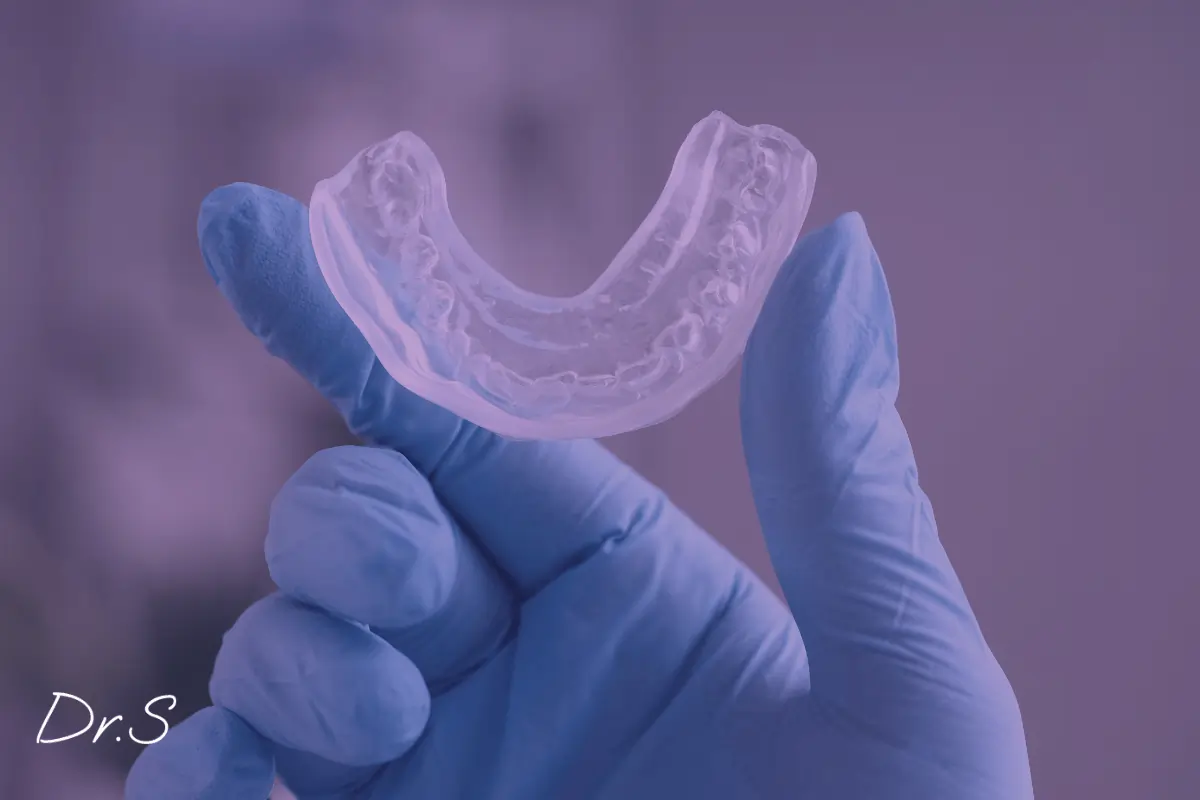
A night guard, which is also called occlusal release gutter, is a transparent resin device, positioned on the teeth during night rest. Its role is to absorb the forces generated by jaw cramps, and to limit direct contact between teeth.
It acts as a mechanical barrier but also as a muscle deprogramming device. By reducing the involuntary contraction of masticating muscles, it relieves joint and muscle pains sometimes related to bruxism.
What difference?
It is often mistakenly referred to as "night gutter" as if there were only one type. In reality, there are several occlusal devices. Some are designed for the night, others for daytime use. Manufacturing, materials and objectives may vary.
In consultation, I take the time to choose the type of gutter adapted to your situation, depending on the intensity of the grin, the presence of pain, or your dental occlusion. Efficiency depends on this precision.
Recognize signs of bruxism in dental practice
Facial and temporo-mandibular muscle pain
Some patients consult for headaches when they wake up, a tense or painful jaw, without imagining that it may come from bruxism. Yet these are typical signs. Masticator muscles, located on either side of the face, can become painful or tired.
Temporo-mandibular joints (or ATM), which connect the jaw to the skull, can also be sensitive. Sometimes you even feel cracks or blockages when you open your mouth.
Teeth and other dental effects
The grinding of the teeth causes progressive wear of enamel, the protective layer that covers each tooth. In the long run, this can create sensitive areas, even cracks or shortened teeth. There are also cases of breakage of former care or dental travel.
Careful clinical examination helps to identify these signs. By anticipating them, the gutter becomes a means of preventive as well as curative protection.
In my practice, patients often feel relief from the first night if the gutter is well adjusted and worn regularly.
What types of gutters exist for bruxism?
Standard occlusal splint vs Custom
There are gutters sold in pharmacy, to thermoform yourself, and gutters made to measure in cabinet. The first category may temporarily troubleshoot, but it is often uncomfortable or too thick. The second, adapted to your exact tooth, is more precise, stable, and much better tolerated.
I always prefer a personalized design, because comfort and good occlusal position are essential to relax the muscles involved and avoid other disorders.
Rigid resin or flexible orthotics: which material to choose?
Flexible, silicone gutters and rigid, hard resin gutters are distinguished. The choice depends on the type of bruxism, its intensity and the patient's feelings. Rigid models are the most common for night use as part of mechanical bruxism.
In some highly sensitive patients, a more flexible version can be tested, but too soft materials that sometimes promote tightness are avoided as much as possible rather than reduced.
How is a custom gutter made?
Footprinting and occlusal balance
It all starts with a consultation. During this appointment, I perform a full examination of your occlusion, joints and dental wear. Then I take prints, which can now be digital or physical as the case may be.
These prints create a precise 3D model of your jaw. The laboratory then uses this data to shape the gutter as accurately as possible.
Production time and delivery
The average delay varies from 7 to 10 days between sending to the laboratory and making your device available. When laying, a test is indispensable. Always adjusts the gutter in the mouth to avoid unwanted tension.
Adjustments may be required in the first few weeks, as muscle adjustment progresses.
How can you use your gutter against bruxism?
When and how long to wear it?
Most gutters designed for bruxism are worn at night on the upper arcade. It is recommended to use every day, even if the symptoms come and go. Regularity is indeed a key factor in reducing muscle tension.
In some patients with diurnal bruxism, I can also offer daytime use during periods of stress or clenching (teeth tightness).
Daily maintenance for optimal service life
In order to avoid tartar deposits or deformations, I recommend rinsing the gutter after each use, then cleaning it with warm water with a soft brush and neutral soap. Abrasive toothpastes should be avoided.
Always keep the gutter in a ventilated case and avoid any source of excessive heat, which could melt or deform.
Regular monitoring and possible adjustments
Follow-up in consultation is essential in the first weeks and every 6 to 12 months. This allows me to make sure that the fit remains optimal, that no wear has occurred, and that your symptoms change favorably.
In the event of a change in occlusion, dental care or new pain, the gutter may require modifications or be redone.
What is the price of a Brussels gutter and can we be reimbursed?
Average cost of an anti-bruxity gutter
The price of a custom gutter varies according to the materials used and the place of manufacture. It takes between 150 and 400 euros on average. Standard models in pharmacies cost less, but are less relevant in a medicalized follow-up.
Possible reimbursements and the role of mutual societies
Currently, Social Security does not reimburse anti-bruxism gutters, which are considered comfort devices. However, some mutuals pay part of the fee upon presentation of a quote and a note from the practitioner.
When I prescribe a gutter, I can give you this document so you can discuss it with your health supplement.
What alternatives to the gutter to relieve bruxism?
Manual therapies: physiotherapy and osteopathy
In some cases, I refer my patients to a physiotherapist or osteopath trained in temporo-mandibular joint disorders. Through targeted gestures, these professionals can relax contracted muscles and improve jaw symmetry.
These approaches are complementary to the gutter, especially when the postural or joint context is involved.
Stress, anxiety and behavioural techniques
The Gutter bruxism is not always mechanical. In some patients, chronic stress, high mental load or even night anxiety can trigger or maintain the disorder.
I therefore encourage global management: relaxation, cognitive therapies or simple changes in evening habits can be part of a more comprehensive approach. Oral health is also connected to the nervous and emotional system.
What impact does bruxism have on sleep and quality of life?
Effects of bruxism on deep sleep
Night grin can fragment sleep and disrupt deep cycles, without you being aware of it. Unexplained morning fatigue in a otherwise healthy patient may be an indirect indication.
In some people, bruxism can also amplify existing sleep disorders, such as mild apnea or frequent waking.
Restore comfort of life with good care
When properly adapted, the gutter allows the jaw to relax during the night. It plays on the quality of rest, but also on concentration, irritability and chronic pain during the day.
I often remind my patients that this type of treatment is not intended to cure, but to preserve. Reducing fatigue and symptoms remains a valuable first step towards lasting well-being.
Ultimately, Brussels gutter remains, to date, the simplest and most respectful option to limit the effects of bruxism, while integrating into a global approach centered on your feelings and needs. What other avenues would you find useful to explore in your case?
Patient-centred surgery in Paris

I am Dr Solène Vo Quang.
Every day, I explore what AI can bring to care, while remembering that the relationship with each patient remains our first therapeutic tool.
I provide care with rigour and transparency.



FAQ :
Brussels Gutter
Answer your questions
Can the gutter against bruxism change the long-term occlusion?

In some rare cases, a poorly adjusted or worn gutter too long without control may influence the occlusal balance. Regular monitoring avoids this risk.
Can one use a bruxist gutter when wearing an orthodontic device?
Depends on the type of device. Close coordination between orthodontist and oral surgeon is then essential to adapt the strategy.
Why do some feel new pain after wearing a gutter of bruxism?
This may reflect insufficient adjustment or muscle compensation. Clinical review is always necessary to refine the device.
What is the average life of a gutter against bruxism?
It varies depending on the material, the intensity of bruxism and maintenance. On average, between 1 and 3 years. Annual monitoring remains prudent.