
Jaw Clenching at Night: Causes, Symptoms and Relief
Many patients come to me without knowing why they wake up with tight jaws or diffuse pain in the face. Their dental examinations seem correct, but something's wrong. When we explore the subject together, a question often comes back: is it possible to tighten teeth at night without realizing it?
I am Dr Solène Vo Quang, an oral surgeon in Paris, specializing in the diagnosis and management of bruxism, this functional disorder that causes some people to grin or tighten their teeth at night. This phenomenon can go unnoticed for a long time, but its consequences for oral and overall health are not negligible.
What exactly is night bruxism?
Definition of Brussels and its two main forms
bruxism is defined as involuntary, non-functional, usually unconscious muscle activity. It can take two forms: the static tightening of the jaws, or the more dynamic grinding, which involves friction of the teeth between them. Both intensively solicit the masticating muscles, sometimes until muscle exhaustion.
These movements do not participate in any useful function such as chewing or speech. So we talk about a parafunctional disorder, which can be observed both during the day and during sleep.
Night or day bruxism: what distinctions?
Daytime bruxism occurs during awakening periods. It is often associated with a tense posture related to attention or stress. On the other hand, night bruxism manifests itself during sleep, in its various phases, and it often escapes consciousness.
The body is not then in a repairing release posture. This can result in indirect consequences for sleep, recovery and overall muscle balance.
Why do we hold our teeth at night?
The major role of stress and anxiety
Among the most frequent causes I see in consultation, psychological tensions occupy a central place. Chronic stress, anxiety, or emotional hypervigilance can physically result in tight jaws, sometimes intense, during the night.
This neuromuscular state increases the tone of the masticator muscles, resulting in repeated contractions during the phases of light or paradoxical sleep.
Other causes: fatigue, dental occlusion and physiological factors
Some anatomical situations can also promote bruxism: unbalanced dental occlusion (bad teeth embalming), temporo-mandibular lesions or inadequate body posture. Lack of sleep or medication can also play a role.
The reality is often multifactorial, and it is rare that a single cause alone explains the night tightness.
What are the typical symptoms of bruxism?
Alarm signs at alarm clock
Several clues can alert. My patients often describe pain in the temples or jaws when awakening, a feeling of facial fatigue or headaches early in the morning. In some, teeth become sensitive, as if they had been solicited at night.
It is often these diffuse signs that lead them to seek a medical explanation.
Complications to watch in the mouth
Over time, repeated tooth friction can erode dental enamel. This exposes the teeth to hypersensitivity and increased risk of cracks or premature wear. There is also a gingival recession or inflammation of the gums, linked to constant pressure on the dental arches.
These lesions are not always painful immediately, but they weaken the entire mouth.
In my practice, many patients discover their bruxism through indirect signs such as mandibular fatigue or tooth wear.
Risks of long-term untreated bruxism
Dental damage and hypersensitivity
Tightening or grinding teeth every night for months, even years, eventually alters the balance of the mouth. The enamel, when worn out, does not regenerate. Teeth become more fragile, and their vulnerability to bacteria or shocks increases.
This wear can also change the height of occlusion, with repercussions on all mandibular mechanics.
Joint pain and sleep disorders
When the facial muscles are overstretched, they pull on the temporo-mandibular joint (often abbreviated in ATM), located in front of the ear. This can lead to mouth opening pain, slamming, or sometimes partial blockages.
Sleep disturbed by these repeated tensions is often less repairing, with an impact on concentration, patience, day energy and overall quality of life.
What solutions do you have to stop tightening your teeth at night?
The interest of custom occlusal gutters
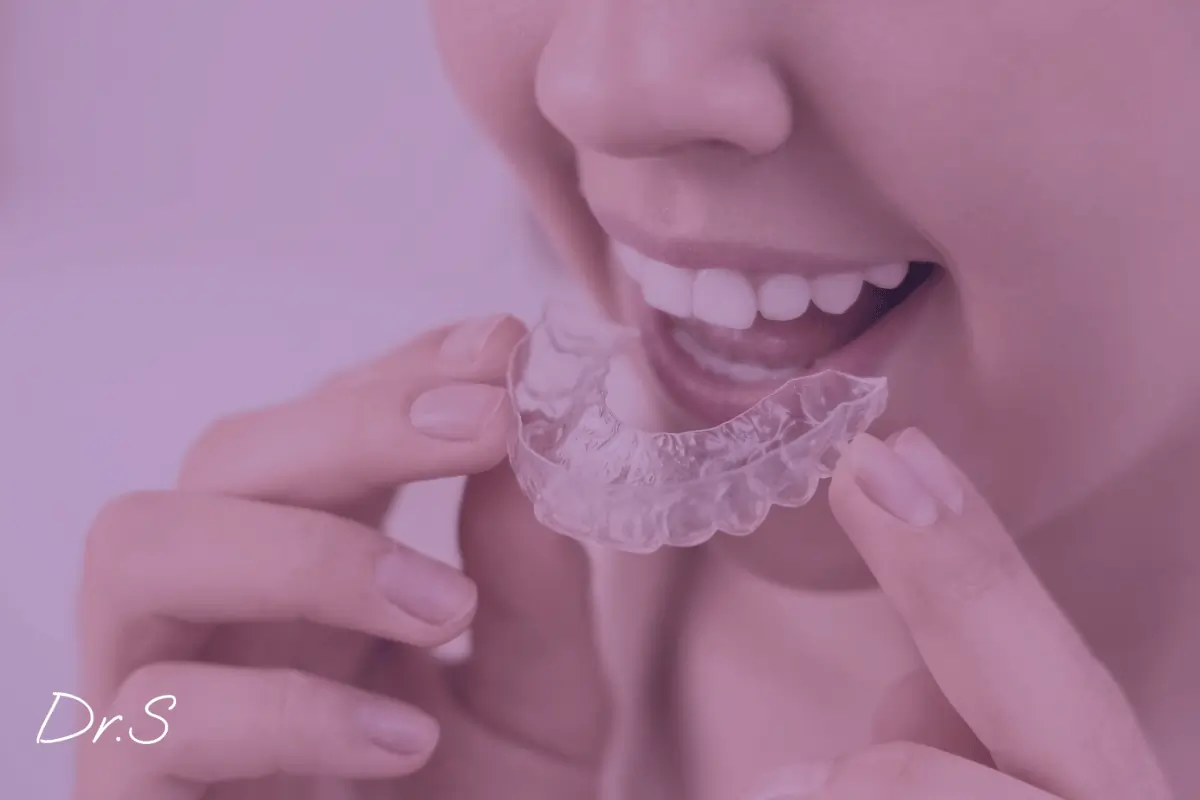
The main objective of these gutters is to protect the teeth from direct wear and tear while reducing excessive activity of the masticating muscles. By placing a flexible or rigid barrier between the two arcades, repeat microtrauma is also reduced.
I often offer patients a custom-made gutter from a dental footprint or 3D modeling. This ensures good comfort at night and limits side effects such as cervical tension or nausea upon awakening.
Complementary techniques: relaxation and physiotherapy
In my approach, I prefer global support. The mechanical treatment of bruxism is useful, but it increases efficiency if it is associated with sustainable stress management. Sophrology, conscious breathing, or some relaxation techniques can help loosen the strain.
Sometimes, patients are referred to specialized physiotherapists for targeted work on the neck and jaw muscles. Biofeedback, a body learning device, can also be offered in some cases.
Preventing Brussels: acting on a daily basis
Adapting your lifestyle and diet
I recommend avoiding exciting evenings (caffeine, nicotine, alcohol), which can aggravate muscle tone during sleep. Similarly, a diet too hard or masticatory in the evening can unnecessarily stimulate mandibulary muscles.
Attention to posture during the day, especially in teleworking, can also reduce accumulated tension in the neck and shoulders.
Treating your sleep hygiene
A relaxing ritual before going to sleep, away from screens and mental stresses, can reduce the chances of unknowingly triggering teeth at night. The regularity of bedtime, the calm environment and the quality of bedding are also important.
In practice, I often encourage my patients to keep a sleep diary to identify triggers or soothing elements, and adjust habits gradually.
When do you consult a specialist?
When symptoms become chronic or disabling
If you wake up regularly with strained jaw, diffuse pain or unusual fatigue, it may be useful to consult. When complaints become daily, with real discomfort in everyday life, this justifies a precise examination of the temporo-mandibular joint and dental occlusion.
In Paris, as elsewhere, a complete diagnosis is needed to adapt the solutions to your real situation, without haste.
Which specialists are turning to?
Your usual dentist can be a first contact. But in some cases, multidisciplinary management is more appropriate. Sometimes I refer my patients to an ENT specialist, a psychologist or a postural physiotherapist when justified.
What always strikes me is the richness of the bonds between mouth, body and emotional experience. This deserves to be explored in finesse, in a shared listening approach.
Relationship between bruxism and body posture
ATM, jaw and postural imbalances
The nocturnal tightening of teeth is not an isolated gesture in the body. Muscle chains are interconnected, and chronic jaw tension can affect the neck, shoulders and even the spine.
Some patients develop subtle postural imbalances, linked to prolonged compression of poorly compensated temporo-mandibular joint.
Global and coordinated support
In some cases, I propose coordinated work with a posturologist or body therapist. This restores a more lasting balance, taking into account both the masticatory aspect and the overall posture and body pattern.
This dialogue between disciplines is part of my practice: it is not just a matter of treating teeth, but of restoring a harmonious functioning as much as possible.
Identifying and treating tightening teeth at night means opening a door to a more peaceful relationship to his body, sleep and self. And you, have you ever seen these signs that, perhaps, speak without your knowledge?
Patient-centred surgery in Paris

I am Dr Solène Vo Quang.
Every day, I explore what AI can bring to care, while remembering that the relationship with each patient remains our first therapeutic tool.
I provide care with rigour and transparency.



FAQ :
Tighten teeth at night
Answer your questions
Can we tighten our teeth at night without grinning and noticing?

Yes, bruxism centered on tightening without audible grin is common, often silent, but may leave signs on examination.
Is an MRI or scanner necessary to diagnose a bruxism?
Non-systematic, these examinations are useful in cases of persistent joint pain or suspicion of deep structural damage.
Can tightening teeth at night aggravate sleep apnea?
It's possible. Brussels can coexist with apnea. Cross-assessment avoids partitioned support.
Can night bruxism also affect children?
Yes, it also affects the youngest. In children, it often evolves with growth, but careful monitoring remains important.