
How to Speed Up Wisdom Teeth Recovery Safely
The healing period after the wisdom tooth removal can give rise to many questions. It's not uncommon for my patients to ask me how tissue repair is actually going, how long it takes, or if a visible hollow in the gum should worry them.
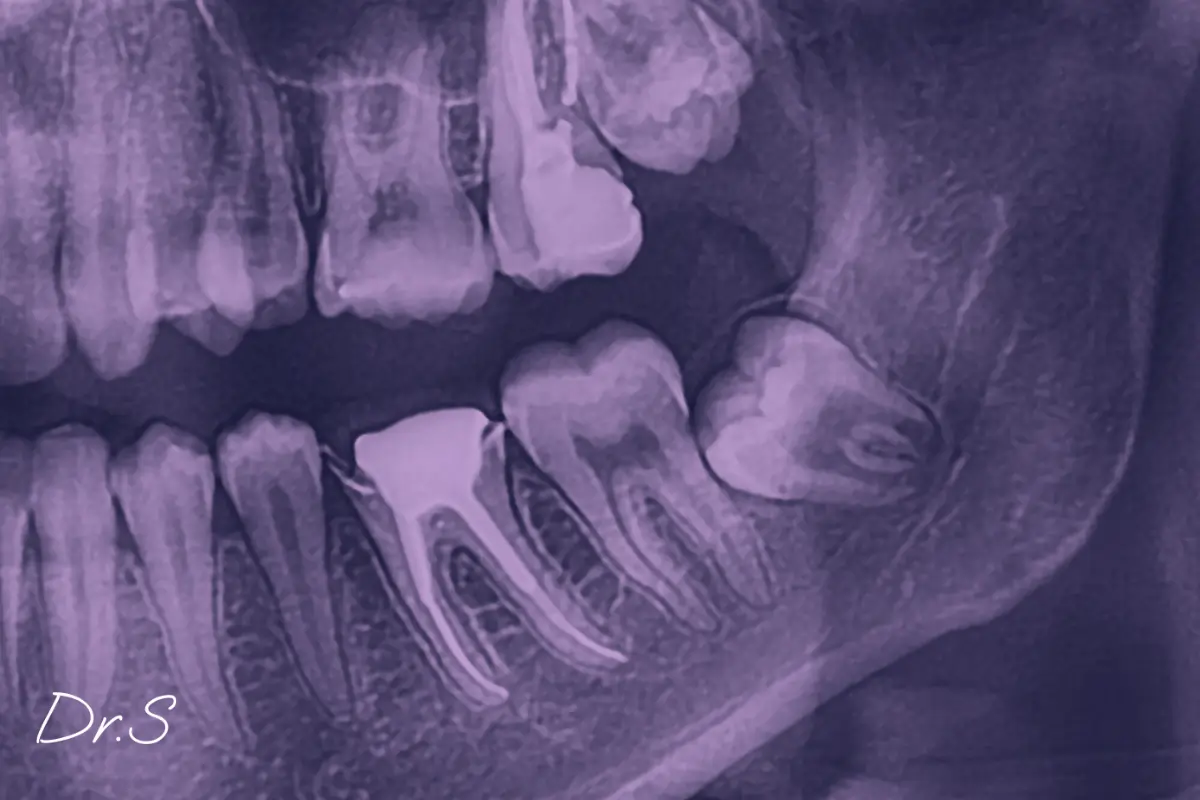
I am Dr. Solène Vo Quang, oral surgeon in Paris in the 18the and I devote an important part of my practice to the management of wisdom teeth. My approach combines medical rigor, 3D imaging and attentive patient listening. Today, I propose that you calmly go through the various steps and precautions related to healing wisdom tooth, so that you can better understand what is happening in your mouth after extraction.
The main stages of healing after extraction of wisdom tooth
Clot formation and immediate reaction
It all starts just after extraction, with the formation of a blood clot in the alveole, the bone cavity left by the tooth. This clot is essential: it protects deep tissue, prevents prolonged bleeding and forms the basis of the healing process.
During the first few hours, your body reacts naturally: a slight swelling, a feeling of discomfort or tiring may occur. These signs indicate that the inflammatory phase is well underway, a key step in structured healing.
Consolidation of the bone and closure of the alveole
In a few days, repair cells colonize the area and begin to weave a new connective tissue. At the same time, the gum and the bone slowly transform to fill the empty space.
Bone closure takes longer than the closure of soft tissue: it is a progressive process that usually spreads over several weeks, sometimes a few months depending on the case.
How long the healing of a wisdom tooth takes
Healing of the gum and progressive closure of the wound
On average, the gum begins to close after 7 to 10 days. What you see on the surface does not yet translate a complete healing. In depth, the tissues take much longer to fully rebuild.
It is therefore important to be careful, even if the wound appears to be closed to the surface. Vigilance remains to be exercised to avoid complications related to too early activity or inadequate hygiene.
Factors that slow down or accelerate recovery
Each patient heals at their own pace. Tobacco often slows down local revascularization considerably. Age, certain chronic diseases, poor hygiene or inappropriate gestures can also lengthen recovery time.
Conversely, a good nutrient-rich diet, adequate rest and adapted local care support the natural tissue repair process.
Cicatrization wisdom teeth hole: should we worry about a visible hollow?
A hole after extraction: normal symptom or not?
Many of my patients are surprised to see a small hole or hollow in extraction, especially during the first weeks. This visible alveole is a witness of the initial tooth volume and slow bone reformation.
In the majority of cases, this hollow should not worry. It will gradually close by the surrounding tissues. Good hygiene helps to gently accompany this evolution without disturbing the natural process.
What signs should be warned if the hole does not close
On the other hand, some symptoms should lead you to consult: pain that increases instead of decreasing, persistent bad breath, unpleasant taste or bleeding after several days. These signs may indicate alveolite, i.e. inflammation of alveole by loss or degradation of clot.
Again, the important thing is to act early. Because rapid management usually helps to calm the symptoms and to restart healing properly.
Post-operative care to promote healing
Oral hygiene adapted after extraction
I recommend to wait 24 hours before any energetic rinse. Then it is possible to gently clean the mouth avoiding the extraction area. A soft toothbrush, used without pressure, remains the most suitable tool.
It is essential not to touch the clot with the tongue or objects. These manipulations weaken healing and expose to avoidable complications.
Useful products: mouth baths, painkillers and ice cream
When indicated, I sometimes prescribe a soft antiseptic mouth bath to use from the second day, not before. Simple painkillers can also relieve temporary discomfort without stopping recovery.
The application of ice, distant from the tissues, can reduce swelling. I recommend using it in short sessions, the first 48 hours only.
In practice, I recommend that my patients respect rest times and avoid any local source of stress on the gum during the first week.
Frequent complications: how to recognize and react
Alveolite, infection or bleeding: symptoms to be monitored
Alveolite is one of the most feared complications, as it can be painful. It often manifests itself in deaf pain increasing after three or four days, sometimes accompanied by a bad smell in the mouth.
Infective signs such as fever, asymmetric swelling or purulent discharge should also attract your attention. It is better to contact me again in case of doubt, rather than let a silent problem evolve.
When to consult urgently with your dental surgeon
I often tell my patients that the pain that worsens instead of calming down deserves attention. The same applies to heavy bleeding or difficulty in opening the mouth beyond the third day.
These signs are not frequent, but in front of them a rapid review is required. We can then adjust the management, restore healing and effectively relieve symptoms.
What to eat (or avoid) during the healing period
Recommended after dental extraction
A sweet diet, warm or fresh, is to be preferred: purees, compotes, yogurts or warm soups are both nourishing and respectful of the wound. The cold can also have a soothing effect.
Essential nutrients, including proteins and vitamins C and A, support tissue repair. Balanced eating helps the body do its reconstruction work.
Gestures to avoid disturbing healing
Avoid hard, crisp or very spicy food during the first days. They can irritate the area and move the clot.
I also advise against drinking with straw, because aspiration can create depression and loosen the clot. The same applies to tobacco and alcohol, which seriously disrupt the healing process.
Post-extraction monitoring: control and removal of wires
When to do a post-operative check
In general, I invite my patients to a screening appointment between 7 and 10 days after extraction. This makes it possible to check the correct closure of the gum and to identify in time any beginning anomaly.
Sometimes a second check is useful, depending on the initial complexity of the act or if the patient has particular risk factors for healing.
Resorbable or not: what differences
We sometimes use resorbable wires, which disappear on their own within a few weeks. Others, not resorbable, require cabinet withdrawal. This choice depends in particular on the area, the tension of the tissues and your medical profile.
In any case, I will clearly explain to you whether a withdrawal is planned, and when.
New approaches to accelerating dental healing
Modern techniques for bone and gingival regeneration
In some selected cases, I'm using technologies such as PRF (platelet-rich fibrin), a blood concentrate from the patient himself. This technique aims to stimulate cell growth and reduce local inflammation.
Biomaterials known as bioactives may also be set up to guide bone regrowth after complex extractions or for later implantation.
Advances in oral surgical care 2025
3D imaging now allows me to plan every intervention more carefully, minimize trauma and anticipate recovery times. It is a valuable tool but never replaces clinical appreciation and continuous dialogue with the patient.
Innovation, yes. But always integrated with caution, in the service of the human, not the speed in itself.
A good healing wisdom tooth rests above all on a global approach: a precise gesture, personalized advice, attentive follow-up, and your own listening to your body. If you feel persistent discomfort or doubt, do not hesitate to consult me. Because often, a simple explanation or adjustment can change everything in the comfort of recovery.
Patient-centred surgery in Paris

I am Dr Solène Vo Quang.
Every day, I explore what AI can bring to care, while remembering that the relationship with each patient remains our first therapeutic tool.
I provide care with rigour and transparency.



FAQ :
healing wisdom tooth
Answer your questions
Can we speed up the healing of a wisdom tooth removed on infected or inflamed bones?

Local infection complicates healing; Careful cleaning and close monitoring are then essential, sometimes in connection with targeted antibiotic treatment.
Why do some cells take more than 2 months to close completely?
If discomfort persists beyond 3 weeks without improvement or increases, a clinical opinion is required to rule out an infection or suffering bone.
Does age affect healing?
Age, very broad bone alveole or slow tissue healing can lengthen the time, without necessarily suggesting complication.
After extraction, is it normal to feel a small movement at the bottom of the gum?
Bone fragments sometimes rise to the surface during healing; This may require simple cleaning if discomfort persists.