
Teeth Shifting After Wisdom Teeth Removal: Is It Normal?
You often talk about it with very simple words. "Doctor, I felt my teeth have moved since the surgery. » The removal teeth after extraction wisdom teeth worried, and understandable, because the mouth is a very sensitive system to small changes.
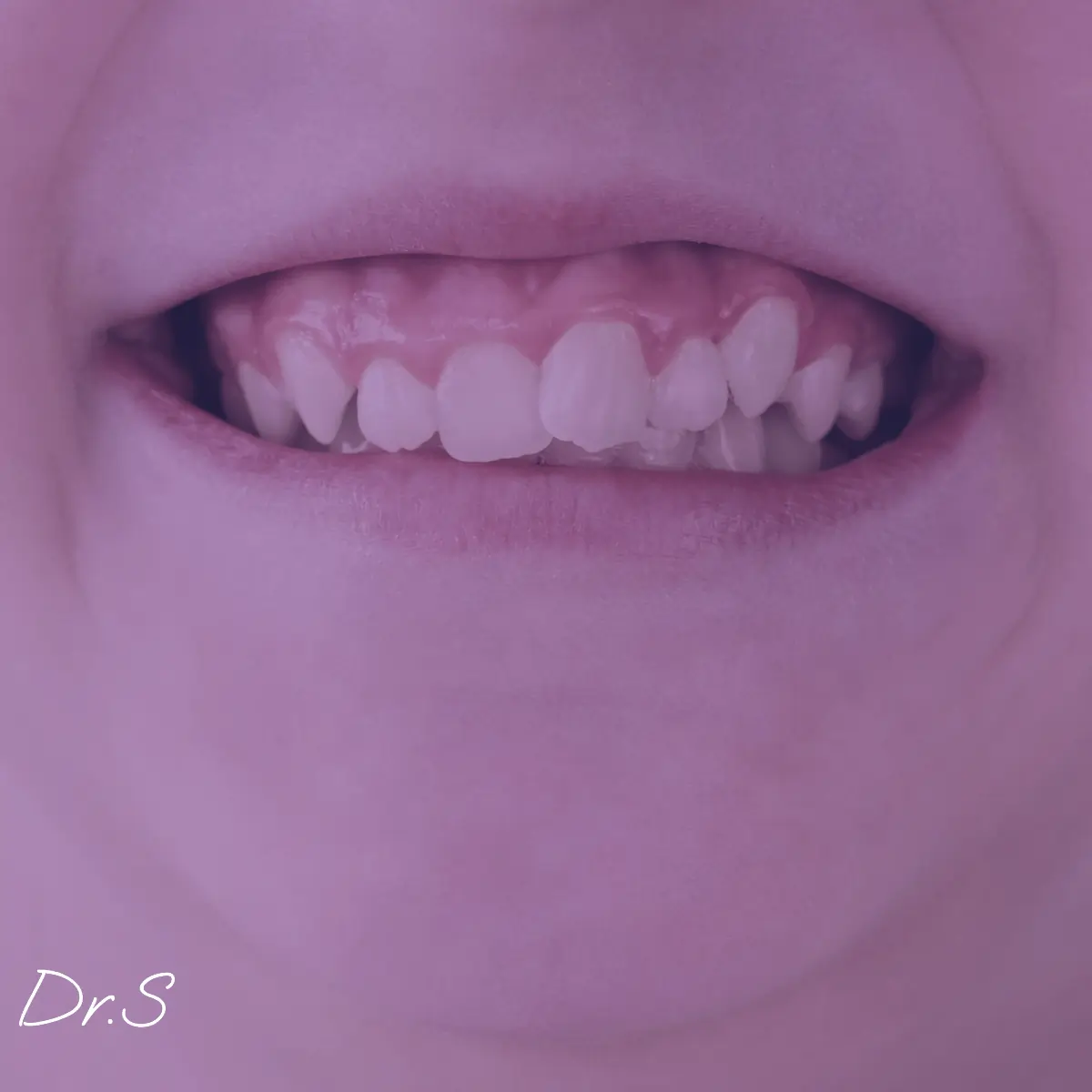
I am Dr. Solène Vo Quang, oral surgeon (medicine and oral surgery) at 7 rue Marbeau, 75016 Paris. In my practice, I see how confusing a feeling of "different bite" can be, even when everything heals properly.
Most of the time, what you feel is explained by healing and micro-variations of occlusion, i.e. how the teeth touch when you close your mouth. Sometimes there are also real changes of alignment, but they do not deduce only to sensation. The stakes are therefore to do the part between impression, adaptation, and real displacement.
Displacement teeth after extraction wisdom teeth: do they really move?
After extraction, many patients feel that "everything has moved." In reality, there are several approaches to understanding this feeling, each with its merits: to look at local healing, and to look at global occlusion.
There are dental movements but they are not systematic after wisdom tooth removal. On the other hand, it is very common for your mouth to reorganize, your muscles to change their way of guiding closure, and some dental contacts to become more present than before.
Removal of bones and gums: what changes after extraction
When a tooth is removed, there is a cavity in the bone called alveole. This zone heals, gradually fills and remodels itself, i.e. it is rebuilt and reorganized according to constraints.
At the same time, the gum closes, and the tissues "relieve" over time. Even if this is done without complication, these changes can alter your support, your way of chewing, and the perception of space at the bottom of the mouth.
Occlusion and dental contacts: when a microvariation becomes very noticeable
It depends on very fine contacts. Sometimes it's enough that one point of contact appears on a molar, or that another one disappears, to make you feel like a molar. offset Net.
This perception is often more pronounced at awakening, when the muscles worked at night, or during chewing, when you unconsciously compare "before and after". Your brain is very effective at detecting a micro-difference, even if global alignment has not changed.
Symptoms: signs of real displacement vs normal healing effects
In doubt, I always prefer to leave your feeling, without minimizing it. Then I try with you to spot concrete clues, because pain, inflammation and muscle tension can create a misleading impression.
This sorting is also useful to avoid a frequent vicious circle: the more one "tests" his bite, the more one contracts, and the more the sensation becomes invasive. The health of tomorrow will not be built into silo, and in the mouth it is the same: teeth, gums, muscles and joints work together.
Typical signs of a change in alignment or mordour
A real changealignment often accompanied by small repeatable facts. You can notice that the dental floss passes differently between two teeth, that a space has appeared, or on the contrary that an area becomes tighter, like a beginning ofcongestion.
Some patients describe a tooth that seems "higher", as if it touched before others, or a clear discomfort to the closure, with a closure path that no longer finds a comfortable position. If a tooth seems mobile, or if you observe a visible movement over several weeks, it deserves control.
Common signs of healing not to be confused
After extraction, swelling, local sensitivity, or an irritated area may temporarily change your way of biting. You can also unconsciously protect one side, which changes the distribution of forces.
The tension of the masticators muscles, especially if you tighten your teeth, may give the impression that "it doesn't fit anymore". In these situations, the feeling is real, but the cause is often functional and reversible, rather than lasting dental displacement.
Impression of movement 18 months after extraction: is it possible?
Yes, a late feeling can happen, and it is a very frequent question in consultation. The expression you sometimes use is very eloquent: impression of moving teeth after extraction wisdom 18 months, as if the body "awakened" long after.
In the majority of cases, this scenario does not indicate that recent extraction caused teeth to move at once. Rather, it evokes natural evolutions, orthodontic recurrence, or constraints such as bruxism. It is precisely there that an examination of occlusion helps to restore clarity.
In my practice, I see mainly changes in contacts and muscles, more than real sudden movements.
Dental migrations with age: natural movements, independent of wisdom teeth
The dental migrations are part of life. Many people observe with the years a slight congestion, often on the front teeth, even without recent extraction and even with a healthy mouth overall.
These natural movements are slow and can become noticeable one day, when a contact changes or a tooth starts to hang more. This may give the impression that "it happened suddenly", whereas it is a progressive evolution.
Orthodontic recurrence and restraint: the often forgotten factor
If you have worn a dental device, the issue of restraint is central. Restraint is the system that maintains the result, such as a wire glued behind the teeth or a gutter, and its absence or weakening may favour a orthodontic recidivism.
I often meet patients who have stopped the gutter at night for years, because everything was fine, then note a subtle shift. Again, it is not the wisdom tooth removed that "repels" the teeth, but a stability that has been released over time.
Habits and constraints: bruxism, support, repeated bite tests
Bruxism corresponds to tightening or grinding teeth, often at night. It can create pain, tension, and unstable feeling of occlusion, because the muscles and joint work too much.
Chewing on one side, pressing on one tooth, or checking your bite several times a day also enhances perception. Sometimes the goal is not to "seek the tooth that has moved," but to reduce the constraints that sustain the symptom.
What to do at home (without aggravating the situation) if you feel a move
When you feel a move, the envy is strong to act right away. I understand this reflex very well, but I encourage you to choose simple gestures, which do not add tension or trauma.
Your role at this stage is primarily to observe and document, so that consultation is more effective. This also avoids turning a transient discomfort into lasting pain by over-solicitation.
Simple and safe measures: monitoring, photos, hygiene, food
In my practice, I often recommend that my patients take two clean photos a week, face and profile, teeth tight and then smile, always with the same light. Add a small note on the date, the discomfort, and the side where you chew, as it helps distinguish sensation and evolution.
Keep a gentle hygiene, with a soft brush, and temporarily avoid the very hard foods that force you to force. If you can, alternate the chewing sides without imposing a "good position" at the price of a crack.
What is best to avoid: force occlusion and non-prescribed solutions
I advise you not to try to "replace" your jaw, to tighten voluntarily to "retrace the box", or to rub the teeth between them to "use". These gestures maintain tension and can cause real joint or muscle pain.
I also advise you to avoid gutters purchased without medical advice. An inadequate gutter can alter occlusion, increase tightening, or move some contacts, while the objective is precisely to stabilize.
When to consult (and when it is an emergency)?
Consulting is not a failure, it is a step of clarification. My role is to verify what is really happening, and to explain to you what I see, with transparency, without dramatizing and without promising that there is never a risk.
The question is not only "is it moving", but also "is it bothering you, and for how long". Duration and evolution are often more informative than intensity on a single day.
Reasons for rapid dental consultation
I recommend you consult quickly if pain increases rather than decreases, if chewing becomes frankly difficult, or if inflammation persists. A change of occlusion that settles, a tooth that seems to move, or a persistent concern after extraction are also good reasons not to wait.
Sometimes, this appointment is mainly used to reassure you, objectivating contacts and checking the area operated. And when you identify a cause, the solution is often simpler when you take it early.
Emergency signs: when to call without waiting
Some signs should call you without delay: fever, swelling that spreads, difficulty swallowing or breathing, or severe bleeding. Intense pain with marked bad breath, unpleasant taste, or suspicion of infection may evoke alveolite, which is a painful inflammation of the extraction area.
In these situations, the objective is safety. You need to build bridges between your symptoms, clinical examination and, if necessary, rapid treatment.
Examinations and possible solutions: from occlusion to restraint
When you come to me for a feeling of displacement, I start by listening to your chronology. Then I check the contacts, the dental mobility, the condition of the gums, and the way you close your mouth, because the occlusion is as much a mechanic as a coordination.
I also pay attention to the second molar, the tooth just before the wisdom tooth, because it can sometimes be sensitive or over-solicited after the intervention. Depending on the context, I propose simple exams and then a proportionate solution.
Assessment: occlusion, mobility, gums and panoramic radiography if necessary
The assessment is based primarily on clinical examination, with the analysis of contact points and closure. I look at the extraction area, healing, and if the gum shows signs of irritation.
A panoramic X-ray may be useful if I need to exclude another problem, such as injury, infection or a nearby tooth damage. When relevant, 3D imaging can also refine some complex diagnoses, but I reserve it to the situations that warrant it.
Treatments: occlusal adjustment, gutter, restraint, orthodontics
Treatment depends on the cause. Sometimes a simple occlusal adjustment, i.e. a micro-rebalancing of contacts, is enough to remove a discomfort that has lasted for weeks.
If bruxism is important, a tailor-made gutter can protect the teeth and calm the muscles, provided it is adapted to your occlusion. In case of orthodontic recurrence or natural movements that have become troublesome, a restraint or orthodontic opinion may be the most coherent route, without haste.
Recovery marks after extraction: days, weeks, months (up to 18 months)
Recovery is not a single event, it is a path. Some feelings are expected, others need to attract attention, and time is a valuable landmark to locate you.
Often insists on one point: a healing mouth can be sensitive and changing, without it being a serious problem. But an unfavourable development deserves control.
Week 1 to month 1: what is common (and what is not)
During the first week, swelling, sensitivity, careful chewing and muscle discomfort are common. You may also feel "not know where to put your teeth," especially if you avoid one side.
On the other hand, pain that worsens, a very severe bad breath, suppuration, or a general condition must not be trivialized. Well, in that case, I'd rather you be back soon.
Months 2 to 18 months: follow-up and ideal time for a check
Between two months and 18 months, the area continues to remodel, and your occlusion can gradually stabilize. If a sensation persists, or if it appears late, it is often the right time for a check, because one can compare the examination with your history and habits.
I encourage you to consult if you have a lasting doubt, especially if you describe an impression of displacement that settles down. Often, objectiveizing contacts and checking the absence of complication will reassure you and choose a simple solution, adapted to your situation.
If the feeling of displacement persists or appears late, a control of the occlusion often allows you to reassure yourself and choose the simplest solution. What matters to me is to integrate these tools with caution, with the human in the center, and to understand together what your mouth is trying to tell you.
Patient-centred surgery in Paris

I am Dr Solène Vo Quang.
Every day, I explore what AI can bring to care, while remembering that the relationship with each patient remains our first therapeutic tool.
I provide care with rigour and transparency.



FAQ :
Displacement teeth after extraction wisdom teeth
Dr Solene answers your questions
Can tooth displacement after extraction wisdom teeth come from ATM disorder or jaw muscles?

Yes. Muscle tension or irritated ATM may alter the bite without any real displacement. Contact and pain are checked when opening.
Why do I feel like everything is moving when only one tooth seems concerned?
The occlusion is a system: contact changes, and the tongue, muscles, chewing adapts. This adaptation is sometimes felt very strongly.
Is a panoramic X-ray sufficient to understand a tooth shift after wisdom tooth removal?
Often, yes for an initial assessment. But if doubt persists, clinical examination of the occlusion takes precedence, and 3D imaging can specify the areas.
Is it risky to wear a gutter purchased online if I feel my teeth moving?
This should be avoided: an unadjusted gutter can move teeth or overload the ATM. There are several approaches, but they must be guided.