
Wisdom tooth stitches: purpose, types, aftercare and complications
After wisdom tooth removal, you may look at your gum and wonder whether everything is normal. Stitches reassure many patients, but they are not always needed and do not, on their own, tell you how smoothly healing will go.
I am Dr Solène Vo Quang, a stomatologist specialising in medicine and surgery of the mouth, at 7 rue Marbeau, Paris 75016. I regularly remove wisdom teeth. My aim is to give you practical guidance, without causing unnecessary worry or playing down signs that need attention.
Why are stitches used after wisdom tooth removal?
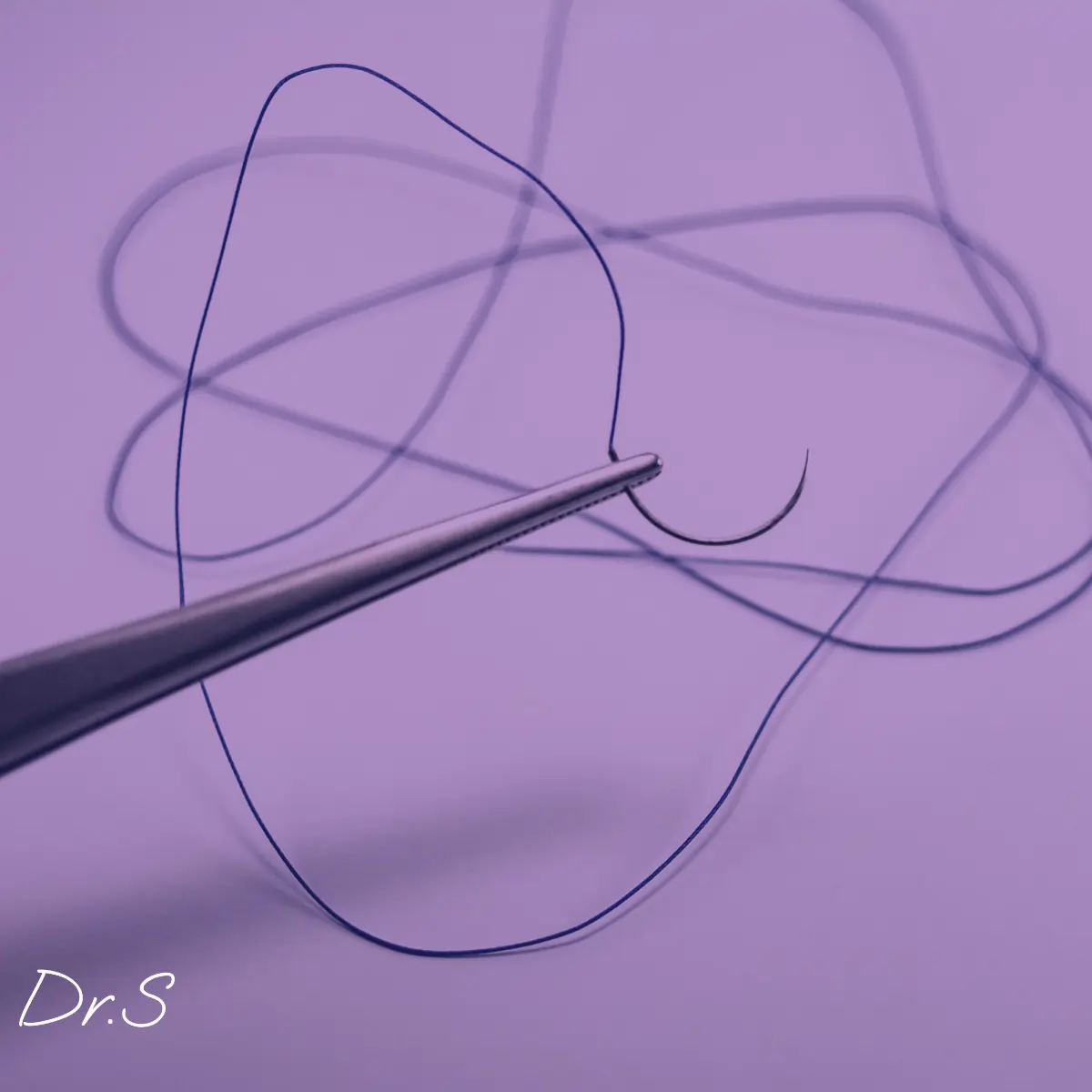
A suture is a stitch that brings the edges of the gum together to help it heal. I may use stitches after an extraction to protect the area, support healing and make the first few days more comfortable. I may also leave the site without stitches if it closes well on its own.
There are several approaches, each with its benefits. The decision depends on the position of the tooth, the difficulty of the procedure and your circumstances, for example whether you bleed easily or have fragile gum tissue.
Closing the gum, supporting the blood clot and limiting bleeding
After extraction, a blood clot forms in the socket, the space in the bone where the tooth was. This clot provides natural protection and a foundation for healing.
Stitches bring the gum together and help keep the clot in place. They can also limit minor oozing and help the wound heal neatly in the first few days, particularly if the gum has been lifted during surgery.
When stitches are common: impacted teeth, gum flaps and large sockets
I use stitches more often when a tooth is impacted, meaning it remains in the bone, or lies sideways, or when an incision and a small gum flap are needed to reach it. They are also common when the socket is large or some bone has been removed to release the tooth, a procedure called an osteotomy.
In these situations, closing the gum properly reduces places where food can collect and helps control bleeding. It does not make the procedure a miracle cure, but it can support the early stages of healing.
Stitches and dry socket: what difference do they make?
Dry socket is a painful complication associated with loss of the blood clot or poor healing of the socket. Stitches may help protect the clot, but cannot prevent dry socket on their own.
In practice, important factors often include smoking, vigorous rinsing, suction from straws or repeated spitting, cleaning too roughly, or neglecting oral hygiene. My role is to explain the balance: protect the wound without sealing everything in, and clean it without causing trauma.
What types of stitches are used after wisdom tooth removal?
Patients often ask which type of thread has been used. Understanding your stitches helps you make sense of what you feel and know whether they need to be removed.
There are dissolvable stitches, which break down on their own, and non-dissolvable stitches, which need to be removed at the practice. The choice depends on the support needed, the area and how the wound is closed.
Dissolvable stitches: how they work and their benefits
Dissolvable stitches are designed to disappear gradually. They may loosen, fray slightly or come away in small pieces. This is often normal as long as the gum stays closed and the pain decreases.
The main practical benefit is that removal may not be needed. I may still suggest a check-up if you have discomfort, a stitch rubs against your cheek or you are unsure about how the area looks.
My priority is for you to know what is normal and what needs prompt advice.
Non-dissolvable stitches: when they are used and removed
I choose non-dissolvable stitches when the gum needs particularly reliable support, for example when the wound edges are under more tension or the area needs to be kept stable. They are generally removed at a check-up after a few days, but the exact timing depends on your healing.
Removal is usually quick and easier to tolerate than patients expect. The follow-up appointment also checks for infection and the condition of the socket, and allows advice to be adjusted if the area is difficult to clean.
How long do stitches stay in, and when do they fall out?
There is no single timetable that applies to everyone. Your gum, bone, general health and the type of extraction all influence healing times.
What I can offer is practical guidance to help you avoid two common problems: worrying too soon, or waiting too long when something is wrong.
Healing times: the gum and the socket
The gum closes at the surface faster than the bone rebuilds underneath. Although the hole may look concerning, the socket fills gradually and bone healing takes longer.
After a more complex extraction, the area may remain tender and uneven for longer. Smoking, pre-existing inflammation and difficulties with cleaning can also slow healing.
When to arrange a check-up: signs of normal healing
When healing is progressing well, pain generally decreases each day, bleeding stops, and swelling settles and then goes down. Opening your mouth may feel uncomfortable at first, but this usually improves.
If pain clearly increases again after a few days, a strong smell develops, or you have a fever or discharge, contact me promptly. These problems are easier to manage when assessed early.
Aftercare: protecting your stitches and supporting healing
After an extraction, the aim is simple: protect the clot and avoid irritating the area. Healing is not a race. It depends on a series of consistent, careful choices, particularly in the first few days.
Oral hygiene should be gentle and regular, not aggressive. You should not scrub the wound, but should not let debris build up either.
The first 48 hours: what helps
During the first 48 hours, rest and cold packs applied externally at intervals often help reduce swelling. If bleeding occurs, biting on clean gauze with steady pressure is more effective than repeated rinsing.
I generally recommend soft foods that are lukewarm or cold, and avoiding foods that get trapped in the wound. Avoid straws and vigorous rinsing, because suction can dislodge the clot.
Days 3 to 7: cleaning, mouthwash and a gradual return to normal
From the third day, oral hygiene becomes a central part of recovery again. Brush gently around the area without pressing on the wound, allowing the gum to strengthen gradually.
Use mouthwash only when prescribed and as directed, as excessive rinsing can be counterproductive. Gentle rinsing without vigorous gargling, especially after meals, is preferable to forceful rinsing that irritates the wound and causes bleeding.
Pain, swelling and restricted mouth opening: treatment and warning signs
Moderate pain, swelling and trismus, meaning difficulty opening your mouth, can occur, particularly after a more complex extraction. Take pain relief as prescribed rather than waiting for pain to become established.
Very severe throbbing pain, swelling that increases instead of going down, or significant difficulty swallowing or breathing requires prompt assessment. The aim is to help you distinguish expected discomfort from a warning sign.
What should you do if stitches loosen, bleed or cause discomfort?
Stitches often cause some irritation, particularly as swelling goes down and the thread becomes more noticeable. Do not pull on them, even if the area itches or the thread catches.
The following guidance covers common situations. You do not need to become a surgeon, but it helps to know how to respond safely.
A stitch rubbing the cheek, a loose knot or bad breath: common causes
A stitch that rubs the cheek may have a protruding knot or may have loosened. Bad breath can result from food trapped near the socket or around the stitches, particularly when brushing is avoided for fear of touching the area.
Rinse gently, maintain regular oral hygiene and avoid touching the wound with your fingers or objects. A loose stitch is not necessarily serious if the gum remains in place, but seek advice if the wound opens or the pain increases.
Bleeding: what to do and what to avoid
If bleeding occurs, use clean gauze and continuous pressure, keep your head slightly raised and rest. Repeated spitting, alcohol, returning to exercise too soon and smoking can prolong bleeding.
Contact me if bleeding continues despite correctly applied pressure, or becomes heavy. I would rather receive an extra call than have a problem worsen at home.
Warning signs: infection, fever, increasing pain and dry socket
Warning signs include fever, pus, hot and painful swelling, or pain that clearly increases again after two to four days. A very unpleasant taste, persistent strong smell or pain spreading towards the ear may also suggest dry socket.
Monitoring the area yourself is not enough in these situations. An examination can establish the cause and the appropriate treatment, which may involve local cleaning and targeted measures.
Can wisdom teeth be removed without stitches?
People often ask whether wisdom tooth removal without stitches is possible. Sometimes it is, but avoiding stitches is neither a goal in itself nor a guarantee of better healing.
I choose this approach when the extraction is straightforward and the gum returns naturally to its position without tension. Safe healing remains the priority.
Criteria: straightforward extraction, a clean socket and natural closure
An extraction without stitches is more likely when the tooth has already erupted, access is straightforward and a large gum flap is not needed. I also consider whether the socket is clean, bleeding is controlled and the gum can close naturally.
Even when an extraction appears simple, your anatomy or the condition of the tissues may make a few stitches preferable. This is decided individually and discussed before the procedure.
Benefits and limitations: comfort, cleaning, bleeding and dry socket
Without stitches, there is no thread rubbing against the cheek, which may improve comfort and make cleaning easier. However, the area may be more exposed in the first few days, making it particularly important to follow the instructions for protecting the clot.
With or without stitches, bleeding and dry socket risk depend in large part on following instructions, smoking and how the area is cleaned. Surgical technique matters, and so does your care at home.
For practices: informing patients and reducing avoidable calls
An extraction can weigh on a patient's mind, especially in the evening or at weekends when a new sensation becomes worrying. Clear, repeated and consistent information reduces anxiety and helps identify genuine emergencies sooner.
Good care depends on more than the surgical procedure. Clear instructions, clinical records and reasonable access to a healthcare team when there is uncertainty also matter.
Key messages before and after surgery: written advice, follow-up texts and photos when needed
Information given only verbally can be forgotten, especially when someone is stressed or tired. A clear written sheet, reminders to avoid smoking and straws, and a follow-up message can prevent misunderstandings.
When needed, a clear photograph may help assess a concern, provided the wound is not disturbed. Patients tend to feel more reassured when they know what to look for and when to call.
Follow-up appointments and clinical documentation
A post-operative check is not simply a routine formality. It checks healing, allows non-dissolvable stitches to be removed if used, and helps tailor cleaning advice to the actual condition of the area.
For the practice, documenting the type of suture, the number of stitches and details of the procedure supports continuity of care. These details connect the surgical procedure with safe follow-up.
Telephone assessment: what the team needs to know
When you call, a short set of questions helps the team assess the situation and decide whether advice at home is sufficient, an early appointment is needed or urgent care is required.
This approach brings structure to a moment when worry can take over. It also helps protect patients by ensuring that important symptoms are taken seriously.
Four questions: bleeding, pain, fever and mouth opening
I look for specific information. How much blood is there: a slight trickle or bleeding that fills your mouth? How severe is the pain, and has it increased since yesterday?
I also ask whether you have measured a fever and whether mouth opening is very restricted, which is called trismus. These questions help clarify the situation and avoid misunderstandings.
Deciding between home care, an early appointment and urgent care
If bleeding is light and controlled with gauze, pain is decreasing and you have no fever, advice and monitoring at home may be sufficient. An early appointment is more appropriate if pain clearly increases, there is a very strong smell, you can barely open your mouth or bleeding persists.
If you have difficulty breathing, rapidly increasing swelling or heavy bleeding that cannot be controlled, seek urgent care. A cautious approach that keeps the patient at the centre is part of good care.
Understanding your stitches, normal recovery and warning signs can make healing less worrying. What information would help you feel informed without feeling overwhelmed?
How long does a stitch stay in the gum?
How long a stitch remains depends on the material, the procedure and healing. Its appearance may change gradually without indicating a problem. Your surgeon will normally explain whether to let it dissolve or arrange removal at a check-up.
Dissolvable stitches. The material breaks down on its own in contact with tissue and saliva. It may become softer, change slightly in appearance or gradually come away. Do not pull, cut or move it with your tongue or fingers, even if it feels uncomfortable. Clean gently around the area, following your aftercare instructions.
A painful stitch. Some local tenderness can occur during healing, especially when the cheek, tongue or food rubs against the thread. However, increasing pain, worsening swelling, persistent bleeding, fever, discharge or a bad smell are reasons to contact the practice. The symptoms and how they change matter more than the appearance of a stitch alone.
A hanging or loose stitch. As swelling goes down, an end may look longer or a knot may feel looser. Do not pull it out or try to shorten it yourself: it may still be supporting the wound. If the stitch causes injury, interferes with eating or the wound appears to open, send a clear photograph to your clinician or ask for a check-up. Any adjustment requires suitable equipment.
Check the area once a day with clean hands and good lighting, without pulling the wound apart. Use mouthwash only if prescribed and at the time advised. If you are unsure, the healthcare team can check the operation record to confirm the type of stitch and what you should do.
Patient-centred surgery in Paris

I am Dr Solène Vo Quang.
Every day, I explore what AI can bring to care, while remembering that the relationship with each patient remains our first therapeutic tool.
I provide care with rigour and transparency.



Frequently asked questions about wisdom tooth stitches
Dr Solène answers your questions
Do wisdom tooth stitches affect the risk of dry socket?

They protect the clot and gum but do not guarantee that dry socket will be prevented. Oral hygiene, avoiding smoking and seeking advice if pain increases remain important.
Can I brush my teeth and use mouthwash with wisdom tooth stitches?
Yes, gently, with a soft toothbrush, without rubbing the wound for 48 hours. Mouthwash should be delayed, often for 24 hours, and used without vigorous gargling. Follow the instructions given by your surgeon.
Is a stitch that rubs or a gap around a stitch after extraction serious?
Often it is not. A stitch can irritate the cheek. However, contact the practice if you have persistent bleeding, a bad smell, fever or increasing pain.
Which symptoms need urgent advice after wisdom tooth stitches?
Heavy bleeding lasting more than 30 minutes despite pressure, difficulty breathing or swallowing, fever, spreading swelling, difficulty opening the mouth, or pain that worsens on days 3 to 5.