
Which Mouthwash Should You Use After a Tooth Extraction?
After a tooth or wisdom tooth extraction, you may want to clean and soothe the area while avoiding infection. You may also have been warned not to disturb the blood clot. Both the timing and the way you rinse matter as much as the product you choose.
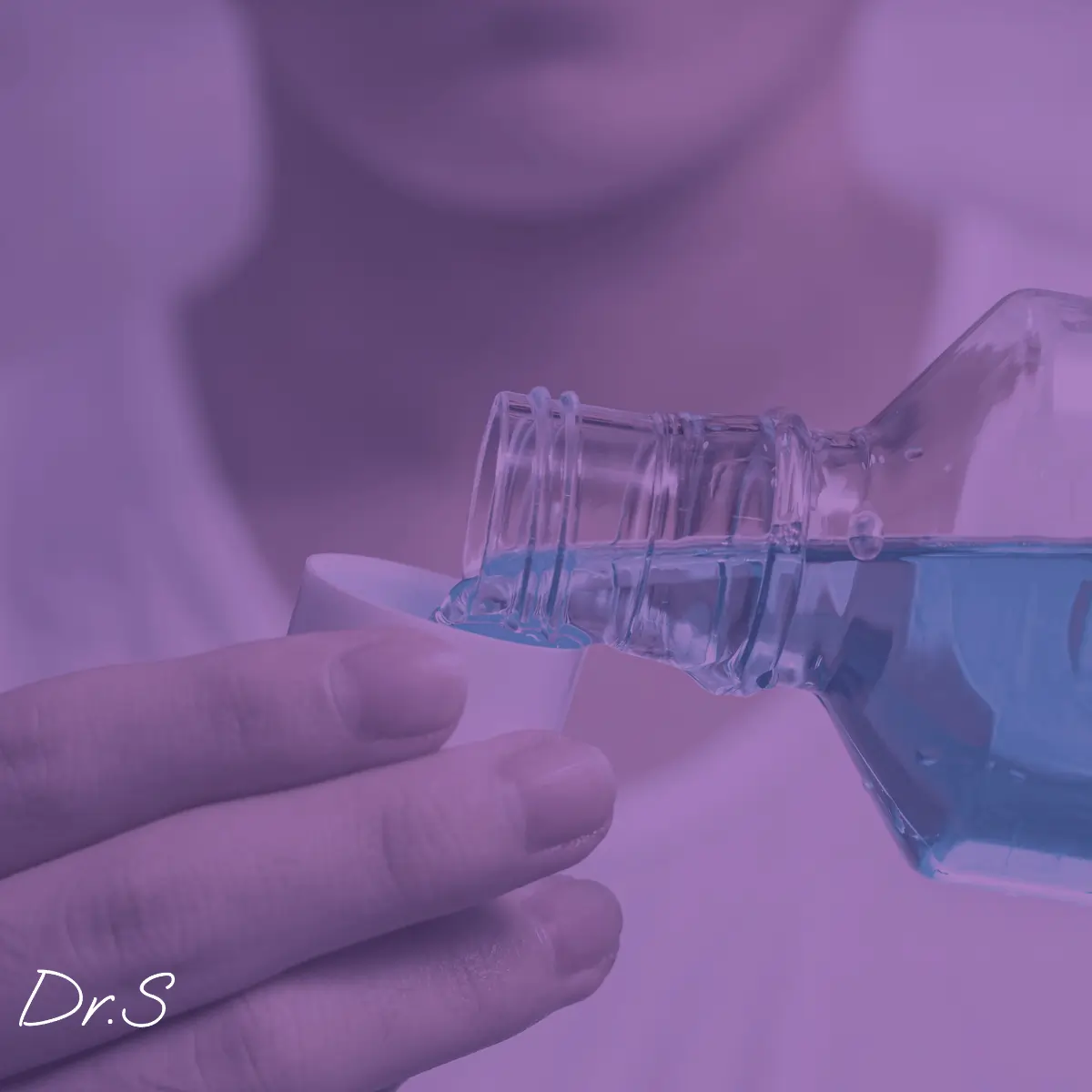
I am Dr Solène Vo Quang, a stomatologist specialising in oral medicine and surgery at 7 rue Marbeau, 75016 Paris. When patients ask me which mouthwash to use after a tooth extraction, I rarely answer with a product name alone. I explain when to start, how to rinse and when a simple salt-water rinse may be enough.
When can you start rinsing after a tooth extraction?
After an extraction, a blood clot forms in the socket, the space left by the tooth. It acts as a natural protective dressing. Disturbing it too early can cause pain, interfere with healing and increase the risk of dry socket.
The aim is to keep your mouth clean while avoiding movements that could dislodge the clot. That is why the instructions for the first few hours differ from those for the following days.
The first 24 hours: what to avoid
During the first 24 hours, avoid rinsing unless your clinician has specifically told you otherwise. Vigorous rinsing, gargling and forceful spitting can disturb the clot, even if you are trying to clear a taste of blood.
Avoid drinking through a straw, as suction can disturb the clot. Avoid alcohol at this stage too: it can irritate the wound and interfere with recovery. A product that causes burning is unsuitable for a fresh wound.
After 24–48 hours: frequency and duration
After 24 to 48 hours, depending on the extraction and your personal instructions, you can usually begin very gentle rinses. The aim is to let the solution bathe the area, rather than swish it forcefully.
I often recommend two or three short rinses a day, particularly after meals, for around 20 to 30 seconds. If your dentist or surgeon has given you different instructions, follow those: they take your individual situation into account.
Salt-water rinses: a simple option that is often sufficient
A lukewarm salt-water rinse is a simple, inexpensive option after an extraction. It can be useful during routine recovery, but it does not necessarily replace a prescribed antiseptic.
It helps keep your mouth clean while you are brushing cautiously near the wound. Lukewarm water may also feel soothing on sensitive tissues.
How to prepare a salt-water rinse
The preparation described here is half a teaspoon of salt dissolved in a glass of lukewarm water, not hot water. The result should be mildly salty, not a strong solution. Follow any different preparation instructions given by your clinician.
Wait until the recommended time after your extraction, usually at least 24 hours, before starting. Take a small sip, let it rest gently against the area, then allow it to drain from your mouth. If you are unsure when to start, ask your clinician first.
The aim is a clean mouth with gentle movements that protect the clot and support healing.
How often, for how many days, and when it is enough
The frequency depends on your comfort and how the wound is healing. Two or three times a day is a common starting point in the instructions I give. I often advise this for a few days, then reduce it as the gum becomes less tender and brushing becomes easier.
If pain is gradually improving and there is no fever or increasing swelling, a simple saline rinse may be sufficient. After a more complex extraction, an existing infection or difficulties with healing, I may prescribe an antiseptic rinse for a short period.
Choosing a mouthwash after extraction: what to use and avoid
Some patients only need a gentle salt-water rinse; others may benefit from a prescribed medicated mouthwash. The choice depends on the wound, your health and your symptoms.
When choosing a mouthwash after tooth extraction, keep this principle in mind: the fresher and more sensitive the wound, the gentler the solution and technique should be. A harsh product may feel as though it is disinfecting the area, while actually irritating the lining of the mouth.
Antiseptic mouthwashes such as chlorhexidine: uses and precautions
Chlorhexidine is an antiseptic used in oral surgery. A clinician may recommend it when the risk of infection is higher, cleaning is temporarily difficult or a particular care plan requires it. Use it as directed for that treatment, rather than as a long-term routine.
Treatment is usually time-limited. Possible side effects include temporary staining of the teeth and changes in taste. If a product causes irritation, significant burning or worsening pain, seek advice rather than continuing regardless.
Products to avoid: alcohol and irritating solutions
Alcohol-containing mouthwashes may sting or dry the mouth after an extraction. If a commercial mouthwash is appropriate, an alcohol-free preparation is generally preferable for a sensitive wound.
I am also cautious about strongly flavoured solutions and concentrated essential oils. A natural product is not necessarily gentle on damaged tissue. A lukewarm salt-water rinse may be a simpler option when it fits your care instructions.
Rinsing gently to reduce the risk of dry socket
Dry socket can occur when the blood clot is lost or breaks down, leaving the underlying bone exposed and causing considerable pain. Vigorous rinsing and smoking can increase the risk, so technique matters.
How you rinse is as important as which product you use. Letting a solution rest gently against the area is different from vigorous swishing or gargling.
The right method: bathe the area rather than gargle
Take a small amount of solution and hold it gently near the wound. Tilt your head slowly if needed so it reaches the area, without forcing the liquid around your mouth.
Then lean over the sink, open your mouth and let the liquid drain out. Avoid spitting forcefully. This simple technique helps avoid disturbing the healing area.
Common mistakes: forceful spitting, scrubbing the wound and high-pressure jets
Avoid forceful spitting, gargling and trying to pick material out of the socket. A healing wound needs stability. Repeatedly touching or scrubbing the socket can cause bleeding and disturb the clot.
I also advise against high-pressure oral irrigators in the first few days. More active cleaning may be possible later, depending on your clinician's advice. If something seems trapped, ask for guidance rather than trying to remove it forcefully.
Pain, an unpleasant taste or bleeding after extraction: what is expected?
Some pain, tenderness when chewing and swelling are common after an extraction. Mild bleeding or pink-tinged saliva can occur, particularly on the first day. A metallic or bloody taste is also common early on.
The overall trend should be towards improvement. Discomfort may become more noticeable as the anaesthetic wears off, but pain that keeps getting worse rather than settling needs attention.
Usual recovery: pain, swelling and tenderness
The area is often tender during the first two days, and swelling may become more noticeable before it subsides. Chewing on the opposite side and choosing soft, lukewarm foods can help you eat more comfortably.
Smoking, strenuous activity too soon and vigorous rinsing can aggravate bleeding and disturb healing. If the area throbs after rinsing, stop forceful movements and check your technique.
Possible signs of infection or dry socket
Pain that increases markedly, often a few days after the extraction and sometimes spreading to the ear or temple, may suggest dry socket. There may also be a strong smell, a persistent unpleasant taste or a socket that appears empty.
Fever, increasing swelling, difficulty opening the mouth or pus may indicate infection. Contact the practice if you are unsure: an examination is more useful than trying to diagnose the wound yourself.
When to seek prompt care after an extraction
Some symptoms need prompt advice because local treatment or a change to your care plan may be needed. You do not have to manage unexpected pain or bleeding alone.
A clearly worsening course or a general symptom such as fever is a reason to contact your clinician.
Bleeding that does not stop, fever, pus or increasing swelling
If bleeding continues, apply pressure by biting steadily on clean gauze as instructed. Avoid repeatedly lifting it to check, as this can disturb clot formation. If substantial bleeding persists, call your clinician.
Fever, worsening swelling or pus should not be dismissed as routine recovery. You may need an examination, local care or appropriate treatment. Do not change prescribed medicines on your own.
Severe pain a few days later: possible dry socket
Dry socket often becomes apparent a few days after extraction. When the clot is lost or breaks down, exposed bone can become very painful, and usual pain relief may not be enough.
Treatment at the practice may be needed, with local care and tailored advice. Seek help promptly for severe pain rather than trying to endure it.
Supporting recovery: hygiene, food and everyday habits
Gentle, regular hygiene, suitable food and habits that protect the clot all help during recovery. Consistency matters more than aggressive cleaning.
Your general wellbeing matters too. Rest, hydration and manageable daily routines can help you through recovery.
Brushing, floss and interdental brushes without injuring the wound
You can usually resume cleaning your other teeth promptly, sometimes that evening or the following day, following your clinician's instructions. Use a soft toothbrush and avoid brushing directly into the wound or scraping the socket. Your usual toothpaste is generally suitable.
Reintroduce floss and interdental brushes near the area when it is less tender and your clinician advises that it is safe. If food repeatedly gets trapped near the extraction site, ask how to clean it without injuring the gum.
Smoking, alcohol, straws and exercise
Smoking increases the risk of delayed healing and dry socket. Avoiding it during recovery is helpful; follow the advice given by your clinician.
Alcohol, suction through a straw and strenuous exercise too soon may aggravate bleeding or discomfort. Resume physical activity gradually. If throbbing, bleeding or pain returns, ease off and ask for advice.
When your health or medicines change the advice
Your general health, medicines or pregnancy may affect the risk of bleeding, infection or delayed healing. Rinsing instructions may therefore need to be tailored to you.
My aim is to give you clear, practical instructions so that you know what to do and why. Tell the team about your health conditions and treatment when your care is planned.
Anticoagulants, antiplatelet medicines and antibiotics
If you take an anticoagulant or antiplatelet medicine, your bleeding risk may differ. Never stop or change it without medical advice, even if you are worried about bleeding. Your care needs to be planned around it.
Take any prescribed antibiotic as directed; mouthwash does not replace it. A medicated rinse and an antibiotic may sometimes be prescribed together, but this is an individual clinical decision. Persistent bleeding or unusual pain needs prompt reassessment.
Pregnancy, diabetes and a weakened immune system
Pregnancy may require additional care when choosing medicines. Diabetes, particularly if poorly controlled, can affect healing and infection risk. A weakened immune system may mean closer follow-up is needed.
Ask for hygiene and rinsing instructions suited to your circumstances. A salt-water rinse may be appropriate, or your clinician may recommend a short course of an alcohol-free antiseptic with a follow-up appointment. A general rule should not replace individual advice.
With the right timing and a gentle technique, rinsing can help keep the healing area clean. Do not ignore worsening pain, a strong unpleasant smell, substantial bleeding or fever: contact your clinician for advice.
Patient-centred surgery in Paris

I am Dr Solène Vo Quang.
Every day, I explore what AI can bring to care, while remembering that the relationship with each patient remains our first therapeutic tool.
I provide care with rigour and transparency.



FAQ: mouthwash after wisdom tooth removal
Dr Solène answers your questions
Does taking an anticoagulant or antiplatelet medicine change the advice on rinsing?

Mouthwash does not replace pressure to stop bleeding. Avoid vigorous rinsing. If bleeding continues despite biting on gauze for 30 minutes, contact your clinician. Do not stop or change your medicine without medical advice.
Should I adapt my rinse if I am pregnant or have diabetes?
Ask for individual advice. A lukewarm salt-water rinse may be suitable, while antiseptics are used for specific reasons. Blood sugar control, immune function and your other health needs also matter.
Is an unpleasant taste normal, or could it mean infection?
A mild metallic taste can occur early on. A strong smell, pus, fever or worsening pain needs prompt reassessment, even if you are using mouthwash.
Can I use an oral irrigator or syringe after an extraction?
Pressure can dislodge the clot. In the first few days, let the solution gently bathe the area. Use irrigation only when your clinician recommends it and shows you how.