
A Bump on the Roof of the Mouth: What Does It Mean and What Should You Do?
Finding a small bump or a painful area on the roof of the mouth can be surprising, and sometimes worrying. A bump on the roof of the mouth is often linked to simple irritation, an aphthous ulcer, or a minor traumatic lesion, but it can also be a sign of an infection that should be examined.
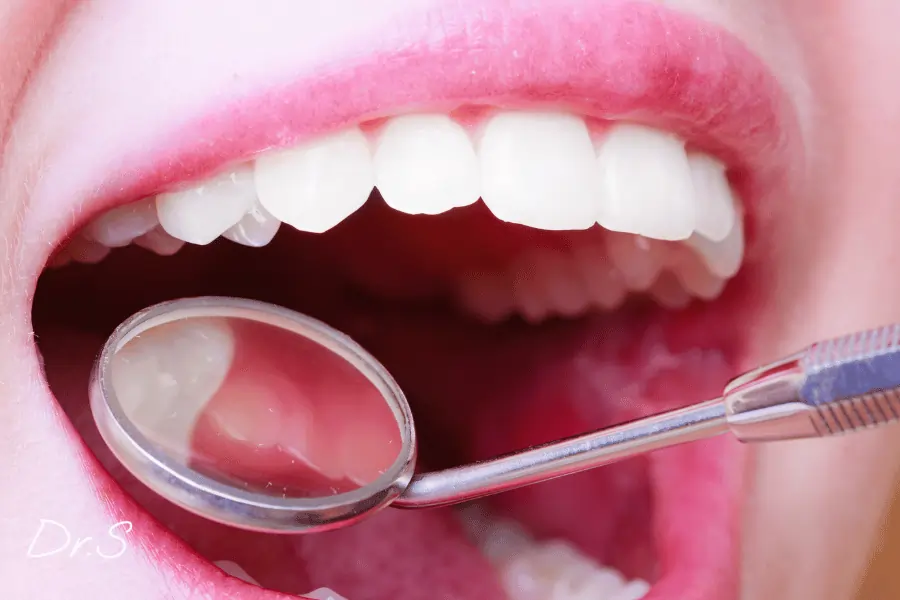
I am Dr Solène Vo Quang, a stomatologist (medicine and surgery of the mouth) in Paris, at 7 rue Marbeau, 75016. In my practice, I regularly see patients for oral lesions, infections, unexplained pain, and I always try to link what you observe to a cautious clinical interpretation, without drawing conclusions too quickly.
What Does a Bump on the Roof of the Mouth Look Like?
What people call a bump in the mouth can take several forms. A red spot on the palate often suggests irritation. A more extensive red patch on the palate may or may not be painful; both occur. A translucent blister, or transparent bump, is generally a small benign vesicle. A white bump in the mouth is most often an aphthous ulcer. In children and adults alike, the approach is the same.
A bump inside the cheek, or a bump in the mouth on the cheek side, can be seen by gently pulling the lip in front of a mirror. The cheek mucosa is thin and is easily injured by a tooth, an appliance, or a denture. The examination is the same as for the palate: the shape, colour, and how long it has been there.
A hard-palate bump, firm to the touch, is not managed in the same way as a soft blister.
An inner-mouth bump should always be looked at in daylight, in front of a mirror.
The palate is the “upper” part of the mouth. Its mucosa is sensitive, exposed to hot foods, friction, and sometimes microbes. This is why a bump on the palate can take very different forms, even when the cause is ordinary.
What I first try to understand is the history of the lesion. Did it appear suddenly after a meal that was too hot, or gradually? Is it single or multiple? And above all, does it change in size, colour, or pain over the days?
White, Red, Transparent Bumps: The Most Common Appearances
A white area can correspond to a small ulceration (a superficial “wound”), an aphthous ulcer, or deposits related to irritation. Sometimes it is a plaque that comes off with rubbing and leaves a red area underneath, which is more suggestive of a fungal infection called candidiasis, often described as oral thrush.
A small transparent vesicle, like a micro-bubble, may suggest a lesion related to a salivary gland or irritation, but also some viral infections depending on the context. A red area, on the other hand, is common after a food burn, diffuse inflammation (stomatitis), or repeated friction.
What I advise against is “self-diagnosing” based solely on colour. Two visually similar lesions can have different causes, and the reverse is also true. The important thing is to link the appearance with your symptoms and how they are evolving.
Pain, Burning, Bleeding: Which Symptoms Really Matter?
Pain is a useful clue, but it does not tell the whole story. An aphthous ulcer can be very painful while remaining benign, whereas an infection can begin with moderate discomfort and then become more intense. A burning sensation, particularly when in contact with acidic or spicy foods, is common in ulcerations and mucosal inflammation.
If you have unusual bad breath, a persistent unpleasant taste, or a discharge that looks like pus, I think more of a local infection. Spontaneous or repeated bleeding should also be taken seriously, especially if the lesion does not heal.
Difficulty swallowing matters greatly, even if the pain is moderate. It may indicate oedema (swelling) or an extension of the inflammation to the back of the mouth, which warrants faster medical advice.
Common Causes of a Bump on the Palate
A bump in the mouth most often has a simple cause: rubbing, biting, food that is too hot, or acidic food. An irritated palate arises from the same mechanism. When looking for the cause of a bump in the mouth, first look at what comes into contact with the area every day.
A sensitive or stinging palate most often indicates surface irritation.
There are several approaches, each with its merits, but clinically we often start with the most likely causes. On the palate, mechanical or thermal triggers are very common, followed by infections and, more rarely, conditions that require more extensive investigation.
I also pay attention to the number of lesions. A single lesion after a specific episode does not mean the same as red or white bumps on the palate that appear in clusters, recur often, or are accompanied by fever.
Aphthous Ulcer, Irritation (Burn, Friction) and Stomatitis
An aphthous ulcer is a small, often round, painful ulceration that can appear after fatigue, stress, minor injuries, or sometimes without a clear cause. An irritation often follows an identifiable event, such as food that is very hot, a crust of bread that has “scratched” the palate, or friction related to an appliance, a denture, or a sharp dental edge.
Stomatitis is a more diffuse inflammation of the oral mucosa. You may experience a “raw” mouth, several sensitive areas, and sometimes general discomfort rather than a single bump. In these situations, I always look for what is maintaining the inflammation, such as an irritating product, reflux, dry mouth, or overly abrasive oral hygiene.
Infections: Herpes (HSV-1), Candidiasis (Oral Thrush) and Others
Herpes (often HSV-1) may cause small painful vesicles that rupture and leave erosions. In some patients, the mucosal eruption is accompanied by fever, fatigue, and tender lymph nodes in the neck. Stress, reduced immunity, or an infectious episode may promote an outbreak.
Oral candidiasis, often called oral thrush, is more likely to present as whitish plaques that can be removed, with red and painful mucosa underneath. It is more common after taking antibiotics, with certain corticosteroid inhalers, in poorly controlled diabetes, or when the mouth is dry.
Other infections exist, and sometimes palatal pain is “referred,” meaning felt in the palate when the cause is dental. If in doubt, an examination of the whole mouth and the teeth remains the safest approach.
When you describe the appearance, pain, and especially how it is evolving, I can already guide the possible causes more accurately.
What to Do at Home for Relief (Safely)
There is no universal remedy for a bump on the palate: the cause guides what to do.
When the lesion is recent, small, with no fever or significant swelling, you can often relieve symptoms with simple measures. The aim is to reduce pain, protect the mucosa, and avoid worsening the irritation.
I say this clearly to my patients, even if the temptation is strong. Do not burst or scratch the lesion. On the palate, this can create a larger wound, delay healing, and open the way to a secondary infection.
Simple Steps: Hygiene, Diet, Avoiding Irritants
Keep up regular but gentle oral hygiene, with a soft toothbrush. A clean mouth heals better, and you reduce the risk of secondary infection in ulcerations. If brushing is painful, adjust the areas and pressure without stopping altogether.
In terms of food, choose lukewarm, relatively soft foods and avoid anything that stings or burns. Alcohol, tobacco, spices, and acidic foods maintain pain and inflammation. Stay well hydrated, as dry mucosa is more fragile.
My practical advice, based on what I often observe in consultations, is to identify the triggering event. I often recommend noting for two days what you have eaten, and whether a very hot food or drink comes just before the pain, as this helps to avoid recurrences.
Mouthwashes and Painkillers: Which Ones and How to Use Them
A lukewarm salt-water mouthwash may soothe and clean without causing irritation, provided it is not too concentrated. Some antiseptic mouthwashes may be useful over a short period, but they should not become a prolonged daily habit, as they may irritate or disturb the oral flora.
For pain, paracetamol is often a simple option if you have no contraindication. Ibuprofen may help with inflammation, but it is not suitable for everyone, particularly in the case of gastric ulcer, pregnancy at certain stages, kidney disease, or specific treatments. If in doubt, ask a health professional before using it.
When to See a Professional: Warning Signs and Emergencies
I know many patients hesitate between “waiting a little” and seeking advice. My role is not to medicalise every discomfort, but to give you clear reference points. What matters is the intensity, progression, and general signs.
In my practice, I prefer to see a patient too early rather than too late when there is concern about infection, because an oral infection can spread. The mouth is an anatomical crossroads, close to the airways and deep areas of the neck.
Seek Prompt Medical Advice If: Fever, Swelling, Severe Pain, Pus
Fever, swelling of the palate or cheek, pain that becomes throbbing, or the presence of pus should prompt you to seek advice promptly. These signs may indicate an abscess, meaning a pocket of infection, sometimes of dental or periodontal origin, such as a periodontal abscess related to the gums.
Pain that prevents sleep, gets distinctly worse within twenty-four to forty-eight hours, or difficulty opening the mouth are also warning signs. In these cases, a clinical examination helps decide whether drainage is needed, whether to treat the dental cause, or whether to prescribe targeted treatment.
Call Emergency Services If: Breathing Difficulty, Difficulty Swallowing, Oedema
If you have breathing difficulty, marked difficulty swallowing, saliva you can no longer control, a changed voice, or oedema that progresses rapidly, do not wait. These situations may be rare, but they can become serious if the inflammation affects the airways.
If in doubt, I encourage you to contact an emergency service or call 15, especially if the swelling extends to the neck or if you have difficulty breathing. Your safety comes first, and rapid advice is sometimes the best decision.
What Treatments Are Provided by a Doctor or Dentist?
When you consult about a bump on the palate, I do not limit myself to looking at the lesion. I try to understand the whole context, your medical history, your treatments, and what has happened in the preceding days. A good diagnosis in the mouth often relies on simple details, but ones that have been gathered properly.
Depending on the situation, improvement may be quick or may require a few days of local care. I always prefer to give you realistic expectations, with a clear plan and signs that should prompt you to contact me again if things progress poorly.
Examination and Possible Diagnoses (Aphthous Ulcer, Abscess, Fungal Infection, Herpes)
During the examination, I look at the exact location, size, shape, the presence of ulcerations, and the condition of the surrounding mucosa. I also check the teeth, gums, dentures, and sometimes palpate the area and the lymph nodes in the neck if relevant.
When the appearance is not typical or the lesion persists, a sample may be useful, particularly if I suspect a fungal infection or a specific infection. I may also request imaging, especially if I am concerned about a deep dental origin or an abscess, and 3D imaging can help in some complex cases.
Treatments: Antiseptics, Antifungals, Antivirals, Local Care
Treatment depends on the cause. For an aphthous ulcer or irritation, I often favour protective local care, sometimes a gel, and measures to avoid irritants, with follow-up if it recurs. An antiseptic may be offered for a short time if the mucosa is very inflamed.
In the event of candidiasis, a local antifungal is generally indicated, and I always look for the contributing factor, such as a recent treatment or dry mouth. For herpes, an antiviral may be discussed depending on the severity, how early it is taken, and your individual context. In the case of an abscess, the priority is to treat the focus, sometimes with drainage and dental care, and antibiotics are useful only in certain well-defined situations.
Duration and Contagion: What You Need to Know
A lump on the palate that disappears and returns in the same place should be shown to a professional.
You often ask me how long it will last, and whether you risk infecting those close to you. The answer really depends on the cause, and that is one of the reasons why I rely so much on how it changes over time.
Another important point is repetition. A lesion that returns frequently, or several episodes of painful bumps on the palate, warrants consultation to look for a triggering factor and prevent it from becoming established.
How Long Does It Last Depending on the Cause (Practical Reference Points)
A simple burn or traumatic lesion of the palate often improves within a few days if you protect the area. An aphthous ulcer may last about one to two weeks, with more intense pain at the beginning followed by gradual easing. If pain remains stable or worsens, I prefer to reassess.
Candidiasis may persist as long as antifungal treatment is not initiated and the contributing factor is not corrected. A herpes outbreak often progresses over around one week, but contagiousness is mainly present when lesions are active.
If a lesion has not healed after two weeks, spreads, or recurs often, it is reasonable to seek advice. It is not necessarily serious, but this is a useful time limit so as not to miss a different diagnosis.
Is It Contagious? Precautions at Home and Around Others
Not all causes are contagious. Irritation, an isolated aphthous ulcer, or a traumatic lesion are not transmitted. On the other hand, some infections, such as HSV-1 herpes, may be contagious when vesicles or lesions are active.
During an outbreak, I recommend avoiding sharing cutlery, glasses, or toothbrushes, and avoiding kissing. Handwashing remains a simple measure, especially if you touch the area or apply a local product.
If you have a bump on the roof of the mouth, I advise you to relieve it without causing irritation, monitor how it changes, and seek advice promptly if the pain is severe, if there is fever, swelling, pus, or difficulty swallowing. And if you have even a slight doubt, you are entitled to ask for advice, because it is often the clinical examination that makes the difference.
Patient-centred surgery in Paris

I am Dr Solène Vo Quang.
Every day, I explore what AI can bring to care, while remembering that the relationship with each patient remains our first therapeutic tool.
I provide care with rigour and transparency.



FAQ —
Bump on the Roof of the Mouth
Dr Solène Answers Your Questions

Often 7–10 days for an aphthous ulcer or irritation. If it persists for more than 2 weeks or recurs, the cause should be reassessed calmly.
Sometimes. An aphthous ulcer is not; herpes can be. The context (vesicles, fever, recurrences) guides the assessment; avoid mouth-to-mouth contact if in doubt.
Gentle hygiene; avoid alcohol, tobacco and spices; rinse with saline or lukewarm salt water. Paracetamol if needed. Avoid applying aspirin to the lesion.
Breathing difficulty, difficulty swallowing, progressing swelling, fever, pus, severe pain. In these situations, caution comes first: seek urgent medical advice.