
Mouth lesion: causes, warning signs and care at the practice
What strikes me in consultation is how a small pain can take up all the space. A mouth lesion may be very ordinary, such as a canker sore or irritation, but it can also be a sign of a problem that deserves to be assessed calmly and methodically.
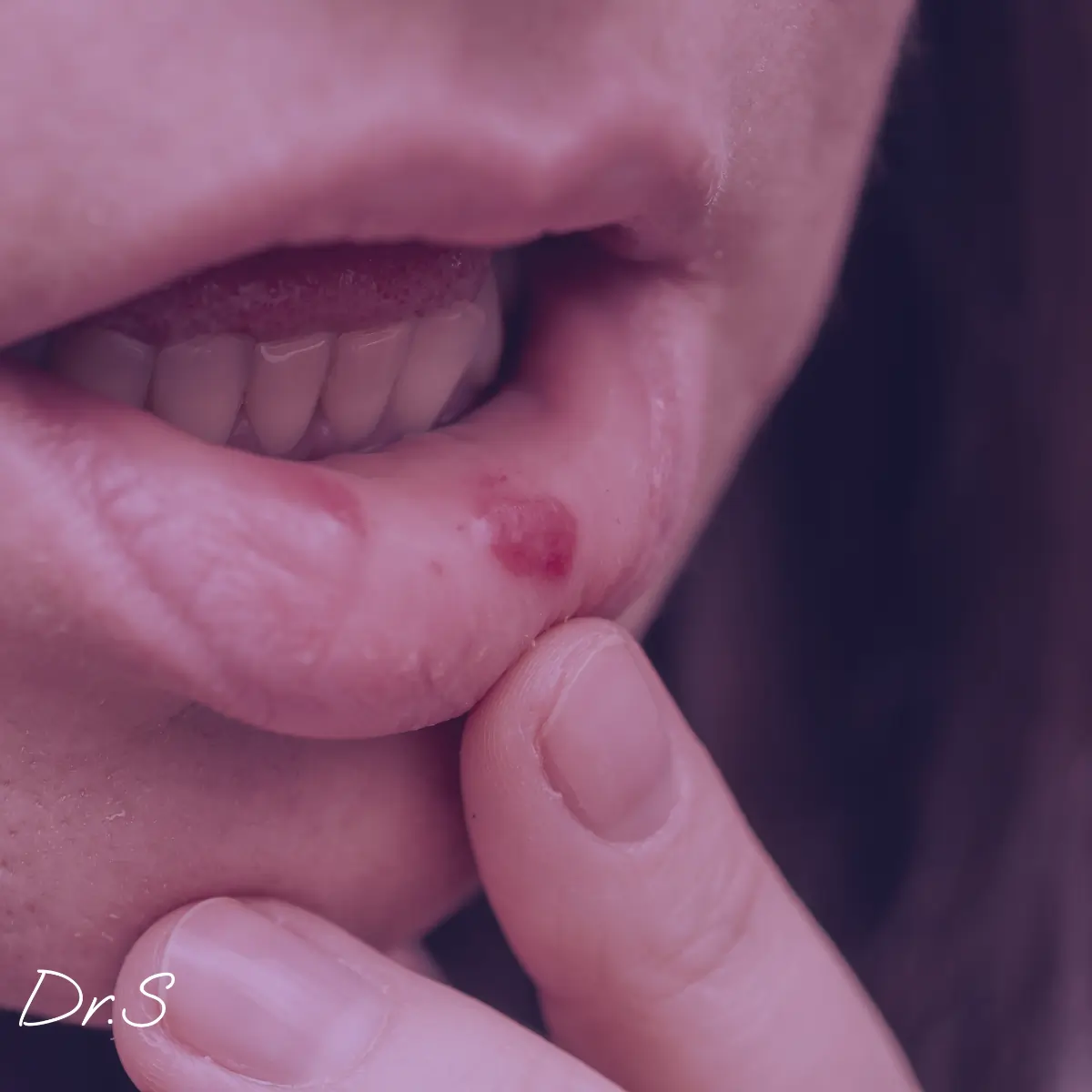
I am Dr Solène Vo Quang, a stomatologist (oral medicine and surgery) in Paris, at 7 rue Marbeau, in the 16th arrondissement.
In my practice, I often examine patients who describe an irritated mouth, a sore that does not heal as usual, or an area that is changing in appearance.
My aim here is simple: to help you describe what you see, identify what can wait a few days and what warrants a quicker consultation, without encouraging self-diagnosis.
Identifying a mouth lesion: what it looks like and where it is located
In the mouth, many lesions look alike at first. A sore, an ulcer (a loss of tissue that is somewhat hollowed out), a spot, a bump or a red area can all cause a burning sensation, discomfort when food touches it, or sharp pain when brushing.
Location matters because it often tells the story of the lesion. An area on the cheek may suggest cheek biting, an area near a tooth may point to rubbing or a dental problem, and involvement of the palate may be linked to a food burn, for example from a dish that is too hot.
Canker sores, mouth ulcers and traumatic wounds: how to tell them apart
A canker sore is often a small round or oval ulcer, with a white or yellow base and a red halo, and is very sensitive. Many patients tell me that the pain is out of proportion to its size, especially when the canker sore is on the tongue or inside the lips.
A traumatic wound, on the other hand, often has a clear context. You have bitten yourself, a tooth edge catches, an orthodontic appliance rubs, or a denture causes injury. The edges are sometimes more irregular, and the pain is mainly triggered by contact, like a scratch on fragile skin.
A mouth ulcer is not a diagnosis in itself; it is a description. What matters to me next is its likely cause, duration and progression. Stress, fatigue, certain infections or deficiencies can also contribute to canker sores, but I prefer to review the whole context with you before drawing conclusions.
Cheek, tongue, gum, palate: common locations and what they may suggest
On the cheek, I often find irritation linked to repeated cheek biting or a tooth that catches. On the tongue, a small lesion may be a canker sore, but it may also be irritation caused by friction, especially if you can feel a sharp edge or clench your teeth at night.
On the gums, a painful area may be inflammatory, related to brushing, or linked to a dental cause. On the palate, a food burn is common, but if the area persists or spreads, I recommend that you do not remain alone with that doubt.
Why the inside of the mouth is irritated: most common causes
When an irritated mouth bothers you, the first question is often: what has changed in the last few days? The mouth heals quickly, but it is also continuously exposed to friction, acidity, heat and products that can dry out or irritate the mucosa.
There are several approaches, each with its merits. You can note a few simple signs, but only an examination can confirm a cause, especially if the lesion lasts, recurs or looks atypical.
Mechanical and chemical irritation: dentures, biting, food and products
Mechanical irritation is very common. A slightly unstable denture, an appliance, a broken tooth or overly vigorous brushing can create an area of friction that eventually ulcerates.
Chemical irritation also plays a role. Certain alcohol-containing mouthwashes, used too often, can burn or dry out the mouth. Very acidic or spicy foods, tobacco and alcohol sometimes maintain inflammation and slow healing, especially if the mucosa is already fragile.
When you describe the appearance and duration, I can already better identify what is ordinary and what warrants a prompt examination.
Infections and inflammation: candidiasis, herpes, lichen planus and other reference points
Candidiasis is a fungal infection (often Candida) that can cause white deposits, a burning sensation and sometimes an unusual taste. It is more common in cases of dry mouth, after certain treatments, or in patients whose general health is more fragile.
Herpes, on the other hand, often causes small blisters that can burst and give way to crusts or erosions. In the mouth, this can be painful, sometimes accompanied by fatigue or fever, especially during a first episode.
Lichen planus is a chronic inflammatory disease that can appear as whitish streaks or plaques, sometimes with sensitive red areas. I mention it because it is among the possible diagnoses, but this is typically a situation where clinical examination is essential, and where follow-up matters just as much as treatment.
Warning signs: when to seek prompt advice for a persistent mouth lesion
Many simple lesions improve within a few days. What should guide you is not just pain, but duration, progression and any associated signs.
I always try to find a balance with my patients: not to medicalise every canker sore, but not to trivialise a persistent lesion. The mouth is a living organ, and when something does not follow its usual healing course, it deserves attention.
Duration, pain, bleeding, induration: severity criteria to note
A practical rule is this: if a lesion does not heal within 10 to 14 days, or if it always recurs in the same place, I prefer to examine you. This is even more important if the pain is severe, the area spreads or its appearance changes noticeably.
Spontaneous bleeding, without brushing or trauma, should also lead you to seek advice. Likewise, if you feel a hard area, induration (a firmer thickening beneath the mucosa), or a wound that appears to deepen, it is better not to wait.
Associated symptoms: fever, swollen lymph nodes, difficulty swallowing or speaking
Fever, the appearance of painful lymph nodes in the neck, or marked fatigue may point to a more general infection or inflammation. Difficulty swallowing, speaking or opening the mouth normally also warrants a quicker assessment, because it may signal a deeper or more extensive involvement.
While waiting for a consultation, I often advise prioritising hydration, lukewarm, non-irritating foods, and an appropriate painkiller if you usually take one without contraindications. On the other hand, I encourage you to avoid using several harsh products in the mouth, because this can sometimes blur the picture and delay healing.
Diagnosis at the practice: how a mouth lesion is examined
When you come to see me for a lesion, I begin by listening to you. The mouth is not understood in isolation: I connect the symptoms, your general background, your habits and what may have triggered the episode.
I then examine the whole mucosa, not just the painful area. This helps identify friction, dryness, more subtle lesions or a sign of dental origin.
History-taking and examination of the oral mucosa: a useful checklist
I ask you when it appeared, what preceded it, and whether you have had similar episodes before. I am also interested in medication, tobacco, alcohol, recent care, and the presence of dental pain or bleeding.
In my practice, I often recommend that patients take a clear photo at the beginning, then another two or three days later, always in the same light if possible. This simple reference point is very helpful in judging progression, especially when the lesion changes quickly and is already different on the day of the consultation.
During the examination, I look at the cheeks, tongue, floor of the mouth, palate, gums and throat. Depending on the context, I gently feel the area and sometimes the neck, looking for induration or lymph nodes.
Possible tests: sampling, imaging, indications for biopsy
If I suspect an infection, I may suggest a sample, for example to confirm candidiasis. If I think there is a dental or bony cause, imaging may be useful, and depending on the situation I use appropriate tests, including 3D imaging when it provides genuinely useful information for your safety.
A biopsy, meaning a small tissue sample, may be indicated if the lesion is atypical, persistent, or if its appearance does not allow a certain conclusion. The idea is not to worry you, but to obtain a reliable diagnosis, because this diagnosis then guides appropriate treatment.
Treatment: relieving the lesion and treating the cause
I always distinguish between what relieves and what treats. Relief is important because pain is tiring, changes eating habits and may increase stress, which itself can sometimes fuel recurrences.
Treating the cause is equally essential; otherwise, the lesion comes back. I also remain cautious about self-medication, especially with strong antiseptics or products used for too long, which can irritate further.
Immediate measures at home: mouthwashes, hygiene and avoidance
In the first few days, gentle rinsing may help, as may brushing with a soft toothbrush and a non-irritating toothpaste. I also recommend temporarily avoiding acidic, spicy or very hot foods, and limiting irritants such as tobacco and alcohol while the mucosa repairs itself.
If friction is the cause, protecting the area is often helpful, but the source above all needs to be corrected. A denture or appliance that causes injury deserves adjustment, because the mouth does not always get used to it; it sometimes becomes inflamed.
Targeted treatments according to the diagnosis: antifungals, antivirals, topical corticosteroids
Antifungals are used to treat confirmed candidiasis, and antivirals may be indicated in certain forms of herpes, depending on timing and severity. Topical corticosteroids are anti-inflammatory medicines applied locally; they are sometimes useful in inflammatory diseases such as lichen planus, but they must be prescribed and monitored.
What matters is the course. If, despite suitable treatment, the lesion does not shrink, changes, or returns quickly, I reassess it. Diagnostic precision is as much an act of care as a prescription.
Prevention: limiting recurrences and protecting the mucosa
Prevention does not mean controlling everything. It means reducing factors that irritate the mucosa and supporting normal healing, especially if you get recurrent canker sores or your mouth is often sensitive.
I also find that prevention becomes simpler when it is realistic. A light but regular routine is better than a succession of products or protocols that are difficult to maintain.
Contributing factors: tobacco, alcohol, deficiencies, stress and trauma
Tobacco and alcohol can weaken the mucosa and slow repair. Stress and lack of sleep also play a role, sometimes indirectly, by encouraging bruxism (clenching or grinding your teeth) or increasing cheek biting.
Deficiencies, dry mouth or an ill-fitting denture can maintain recurrences. If episodes are frequent, I often suggest discussing the matter more broadly, because overall health and the mouth are closely linked.
Recommended routines: diet, brushing, denture follow-up and check-ups
Good hydration, less irritating meals during sensitive periods, and gentle brushing are simple foundations. Regular dental check-ups also help identify a broken edge, irritating tartar or a source of friction that you no longer notice.
If you wear a denture or an appliance, follow-up and occasional adjustments can prevent a small pressure area from becoming a repeated wound. Here, prevention is often a matter of small details, and that is precisely where a clinical examination brings clarity.
Triage and referral protocol (to be integrated into your website)
When a lesion appears, uncertainty is often more difficult than pain. Simple triage helps prioritise, save time and avoid unnecessary delays when a prompt examination is needed.
I encourage you to think of this triage as a way to better describe your situation, not as a way to manage alone. Tomorrow’s health care will not be built in silos, and the first step is often to share information better.
Pre-consultation questions: duration, size, pain, photo, triggering factors
Before the consultation, I mainly seek to understand the duration, the precise location, approximate size and pain. Appearance is also useful: is it a spot, an ulceration, a white patch, a red area, a bump, and does it bleed spontaneously?
A clear photo, if you can take one, is often helpful. I also need to know whether there was a possible trigger, such as a bite, a new appliance, very hot food, an unusual mouthwash or treatments already tried.
Reassurance messages and time frames: Day 0, Day 2, Day 7 according to the signs
If you have warning signs, such as significant difficulty swallowing, a fever, spontaneous bleeding, a hard area, or a lesion that is spreading, advice should be sought on the same day whenever possible. If the lesion is very painful, extensive, or prevents you from eating, I recommend prompt advice within two days.
If you observe clear, steady improvement and everything returns to normal in less than a week, monitoring may be enough. But if there is no real improvement by day seven, or if it returns, I prefer to see you again, because that is often when the diagnosis becomes most meaningful.
If a mouth lesion lasts, changes in appearance or is accompanied by troubling signs, a consultation makes it possible to establish a reliable diagnosis and treat it effectively. What matters to me is that you are not left alone with pain or doubt, and that we take the time to understand what your mouth is trying to tell you.
Patient-centred surgery in Paris

I am Dr Solène Vo Quang.
Every day, I explore what AI can bring to care, while remembering that the relationship with each patient remains our first therapeutic tool.
I provide care with rigour and transparency.



FAQ — Mouth Lesion
Dr Solène Answers Your Questions

The most important factor is its duration and the speed at which it changes.
Date it began, location, size, pain (0–10), bleeding, fever, lymph nodes, medication, tobacco/alcohol, and a clear photo taken from the same distance.
Discussion, full examination of the mucosa and teeth, palpation. Depending on the context
Avoid irritating products (alcohol, essential oils), scratching, and antibiotics “just in case.” Gentle care and targeting the cause, cautiously, are preferable.