
Removing 4 Wisdom Teeth: Local Anaesthetic or Another Option?
When I'm told about the wisdom tooth removal, it's that the question is almost never only does it hurt? She's often more intimate: I'm going to be able to live this moment calmly?
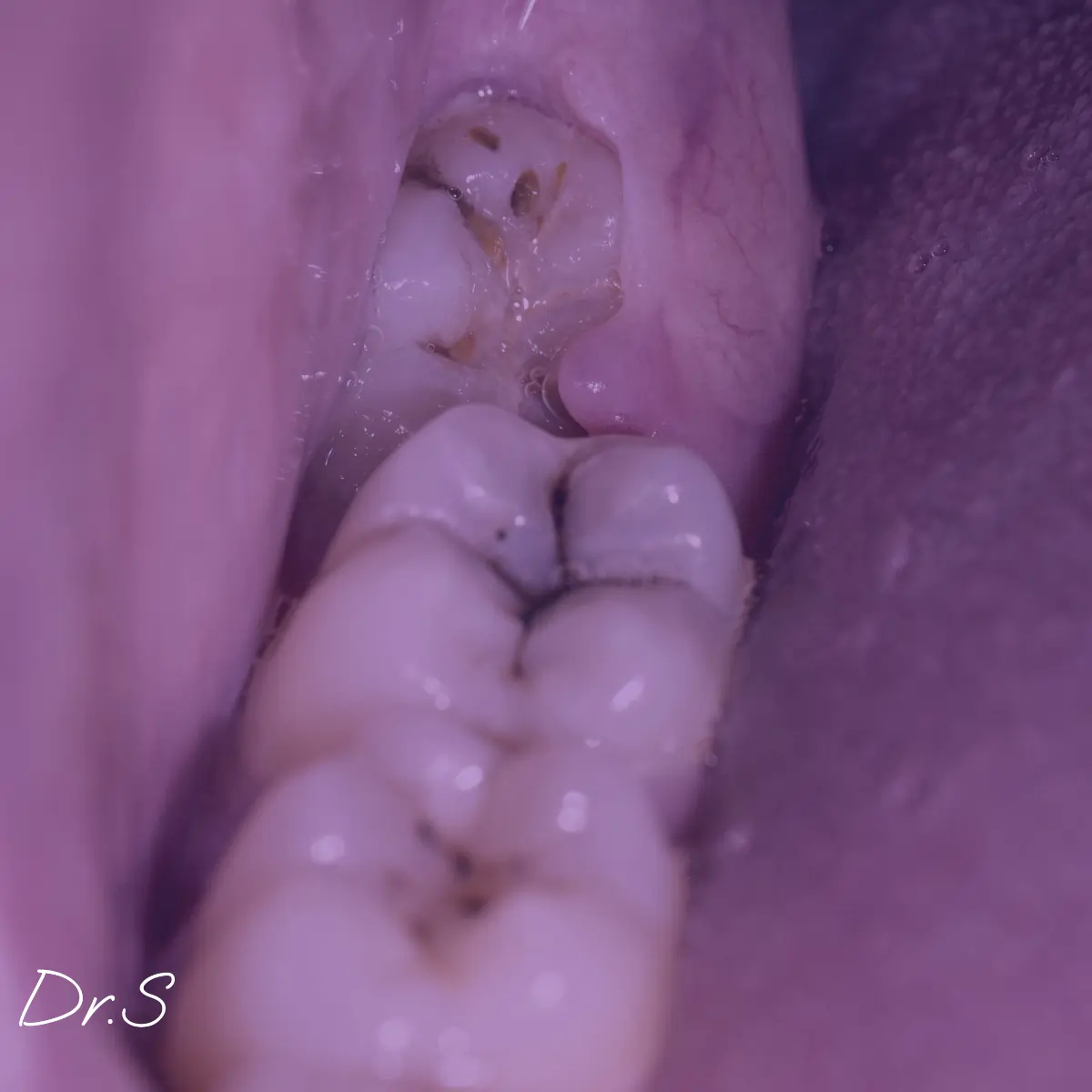
I am Dr. Solène Vo Quang, oral surgeon (medicine and oral surgery) at 7 rue Marbeau, 75016 Paris. If you plan to extract 4 wisdom teeth under local anesthesiaI'll tell you when it's realistic, when it's best to discuss other options, and what to expect before, during and after.
Can we remove four wisdom teeth under local anesthesia?
Yes, it is possible in certain situations, and I do so regularly when conditions are favourable. The challenge for me is to choose a framework that remains safe, predictable, and bearable for you, without holding on to a technique in principle.
In my practice, I decide mainly according to the surgical difficulty, the probable duration and your comfort. There are several approaches, each with its merits, and the right option is often one that reduces unforeseen events.
Favourable cases: teeth out, little surgery
When the wisdom teeth have come out (also known as "erupted"), accessible, and the roots have a simple shape, local anesthesia often suffices. You stay awake, the area is asleep, and the lens is a clean dental extraction, with a short gesture.
In these cases, you can sometimes remove the four teeth in a single session, especially if the mouth opening is good and you tolerate the care. I also take into account the recovery: four extraction sites, even simple ones, demand a serious post-operative organization.
More complex cases: teeth included, nerve close, long-term surgery
The situation changes when a tooth is included, i.e. still in or partially out. It may then be necessary to clear the tooth, cut it, or remove a little bit of bone, which lengthens surgery and increases fatigue.
For the lower teeth, I am particularly attentive to the proximity of the inferior alveolar nerve, the nerve that gives sensitivity to the lip and chin. When imaging suggests significant proximity, I discuss with you the level of difficulty, the risks, and the most suitable setting, which may include sedation or general anaesthesia.
The 3 criteria that tilt the balance
The first criterion is estimated duration. A short extraction under local anaesthetic often occurs well, while a long act, even painless, becomes more difficult to withstand because of position, noise and tension.
The second criterion is your level of anxiety, tolerance and experience of care. The third is radiological complexity, i.e. what the panoramic radio or the CBCT show, a 3D imaging that helps to see the roots and anatomical structures accurately.
Local or general anesthesia: how to choose (and when to add sedation)
The question4 wisdom teeth anaesthesia local or general It's very often back. I understand it, because the word "general" sometimes reassures, and the word "local" sometimes scares, while, in reality, one chooses a balance between comfort, security and logistics.
I always propose a shared decision, based on examination, imaging and your feeling. My role is to give you clear benchmarks, without minimizing the constraints of each option.
Quick comparison: local, MOEPA, sedation IV, general
Anesthesia local sleeps the area, you stay conscious, and recovery is usually simpler. The MOEPA (inhalation) is a gas mixture that relaxes and reduces anxiety, while letting you respond, which can make the experience lighter.
The intravenous sedation (IV) is deeper, often used when anxiety is severe or intervention is longer, with appropriate monitoring. Lgeneral anesthesia you sleep completely, is done in ambulatory surgery structure, often requires a fast, and involves a stricter organization, especially for the accompanied return home.
I choose with you anesthesia that secures the gesture and your experience, taking into account your radios and your comfort.
Patient profiles: anxiety, dental phobia, nausea
Some patients have moderate but manageable anxiety, and a well-conducted local anesthesia is sufficient. Others have dental phobia, a major nausea, or difficulty staying still, and this is not a matter of will.
In these situations, sedation can transform experience, even if pain is already well controlled into locoregional anaesthesia. I prefer to say it simply: a tense patient, who fights his stress, is running out quickly, and the quality of the surgery can suffer.
Background and safety: when anaesthetistic advice is required
There are also areas that require caution and coordination. Sleep apnea, obesity, certain cardio-respiratory diseases, or treatments that interact with sedatives, may change the choice of technique and location of care.
In these cases, the opinion of the anesthesiologist becomes central, particularly if general anaesthesia or sedation IV is envisaged. Tomorrow's health will not build into silo, and I'm trying to build bridges between your medical history and planned surgery.
Procedure: from consultation to exit (cabinet, clinic, outpatient surgery)
Patients often ask me how it's going to happen, concretely? I think this is an essential question, because understanding the course reduces a lot of apprehension, and allows you to better organize yourself.
Depending on the anesthesia chosen, the place can be my office or an outpatient surgery structure. In any case, the idea is the same: anticipate, secure, and then accompany you in recovery.
Prior to intervention: examination, imaging, treatment plan, consent
Before any wisdom tooth removal, I do a clinical examination and I analyze imaging. Panoramic radio gives an overview, and the CBCT, a 3D imaging, is useful when a tooth is included or close to a nerve, to refine the strategy.
I then explain the treatment plan, the alternatives, and the risks, and then we validate informed consent. The instructions are personalized: medicines to be taken or avoided, fasting if necessary, and smoking cessation, as tobacco clearly increases the risk of poor healing.
Day D: injection, surgical action, duration, monitoring
On the day of surgery under local anaesthetic, I gradually inject and wait for sleep to be sufficient. The goal is that you do not feel any sharp pain, and I invite you to tell me immediately if something becomes painful, in order to adjust.
The gesture can be simple extraction or small surgery with incision and stitches, depending on the position of the teeth. After the act, a monitoring phase allows to check the bleeding, your general condition, and the criteria for returning home, which are stricter in case of sedation or general anesthesia.
Pain and sensations with local anesthesia: what is normal
I want to be very clear: "Don't get hurt" doesn't mean "don't feel anything." Most concerns come from a mixture of pain and unusual sensations, and my role is also to help you distinguish them.
In practice, when anesthesia is well done, pain is controlled, but the body continues to perceive pressures and vibrations. And that's normal.
During: pressure, vibration, noise, but no sharp pain
During the procedure, you can feel tiring, pressure, vibration, and hear instrument sounds. These sensations may impress, especially if you do not expect them, but they must not be acute pain.
If you feel a real pain, I'd rather you tell me right away. In my practice, I adjust the anesthesia without waiting, because the goal is a comfortable and precise act, not a test.
After: when anesthesia fades, pain, swelling, trismus
When anesthesia fades, the pain usually appears gradually, within hours. Swelling may occur, especially for lower teeth or more surgical extractions, and a trismus may appear, i.e. a difficulty in opening the mouth for a few days.
External cold, rest, and prescribed painkillers help a lot, provided you respect the doses. My advice, very concrete and based on experience, is to take the first painkiller before the complete end of the anesthesia, if I prescribed it to you, because it makes the transition softer.
Risks, side effects and contraindications: what to anticipate
No wisdom tooth removal is safe, even when it goes very well. I prefer to give you simple cues: what is common, what is rarer, and what should lead you to contact me again.
Anticipating doesn't mean worrying. It means acting at the right time, with the right signals.
Common risks: bleeding, alveolite, infection, prolonged pain
Mild bleeding in the first few hours is common, especially if you spit often or rinse too soon. The alveolite corresponds to painful healing of the alveole, often favoured by tobacco or rinsing too early, and it gives pain that persists or increases after a few days.
An infection is rarer but possible, with pain, swelling, sometimes fever, or bad taste. Prevention requires gentle hygiene, respect for the moment when I allow you to bathe your mouth, and the avoidance of straw and tobacco, because aspiration and smoke disrupt healing.
Possible side effects: numbness, haematoma, nausea (if sedation)
After a local anaesthesia, numbness of the lips and cheek may take a few hours, and haematoma may appear. In rare situations, especially on the lower teeth, transient nerve damage can cause an abnormal sensation of the lip or chin, which warrants careful follow-up.
With sedation or general anaesthesia, nausea or fatigue can occur, especially in the early hours. That is also why I ask you for a companion for the return and a quiet day, without driving and without any important decision.
Special situations: anticoagulants, pregnancy, allergies, co-morbidities
If you are taking anticoagulants or antiagregants, I tell you clearly: never change your treatment alone. I coordinate if necessary with your doctor, because the aim is to reduce the risk of bleeding without creating a cardiovascular risk.
In case of pregnancy, known allergies, or important co-morbidities, the protocol, medicines, and sometimes the schedule are adapted. Integrate these tools, with caution, with the human in the center, is also to respect your life situation, not just your mouth.
Patient checklist: prepare and recover well (pre-op and post-op)
I see how good preparation changes the experience. You gain in serenity, you limit classic mistakes, and your healing is often easier.
I suggest you think in two steps: organize before, then protect the next. It sounds basic, but that's what makes the difference when you go home.
48 hours before: organization, meals, transportation, prescription
Two days before, plan soft and lukewarm meals, ice or cold pockets, and check that you have your prescription. If a sedation or general anaesthetic is planned, anticipate the transport and attendant, as you must not return alone.
It's also the right time to write down your questions, including those that you think are "best". Often, what soothes the most is not more technical information, but a clear explanation of what awaits you.
The 7 days after: hygiene, food, sport, return to work
The following days, brush your teeth gently avoiding the area operated at the beginning, and then gradually approaching according to my instructions. The diet remains rather soft at first, then you gradually reintroduce firmer textures, depending on the pain and mouth opening.
For sport, I usually recommend a gradual recovery, as the effort can revive bleeding or increase swelling. For work or studies, I give you a personalized benchmark, as simple extraction and impacted tooth surgery do not recover at the same rate.
Warning signs: when to call back or consult
I ask you to contact me without delay if you have a fever, bleeding that does not yield despite compression, or pain that increases significantly after 48 to 72 hours. Poor smell or persistent taste can also lead to alveolite or infection.
If you have difficulty swallowing, breathing, or swelling that spreads quickly, you should consult as a matter of urgency. Fortunately, these situations are rare, but it is important to know how to recognize them.
FAQ: The questions we ask the most before removing the 4 wisdom teeth
Before extraction, there are always very concrete questions, and they are legitimate. I reply here to those most often returning to the firm, with nuances, because your situation makes a difference.
My goal is that you can project yourself into a quiet decision, aligned with your reality, and not only with a general idea of
Can we do everything in one session?
Yes, it is sometimes possible, and it can be practical: one recovery period and one stop, when everything is simple. But if surgery is complex or the duration of surgery is long, splitting into two sessions can be more comfortable, and sometimes safer, depending on the context.
I discuss with you what this implies in terms of pain, swelling, reactivity, and choice of anesthesia. The idea is not to do fast, but to do well, with reasonable recovery.
How long do you expect to stop?
For many patients, a few days are enough, especially when the teeth are out and extraction is simple. If teeth are included, if the act is long, or if your work is physical or highly exposed socially, you may need to plan for more.
I'm setting benchmarks, but I'm careful, because your swelling, your sleep, and your pain threshold count as much as the technique. What guides me is your ability to eat, talk, and recover without exhausting yourself.
Who performs the act: dentist, oral surgeon, maxillofacial surgeon?
A dental surgeon can extract wisdom teeth in many situations, especially when they are accessible. One oral surgeon, like me, is trained in medicine and mouth surgery, and often intervenes when there are included teeth, particular complexity, or a medical field to consider.
The maxillo-facial surgeon intervenes on a wider field of the face and jaws, and can be asked for very complex cases. What matters, basically, is that your file is accurately evaluated, with appropriate imaging, and a strategy consistent with your overall health.
In conclusion, the right choice between local or general anesthesia depends on your radios, surgical complexity and comfort. I encourage you to ask for a personalized opinion, in order to plan an extraction as calm as possible, with clear information and a relationship of trust.
Patient-centred surgery in Paris

I am Dr Solène Vo Quang.
Every day, I explore what AI can bring to care, while remembering that the relationship with each patient remains our first therapeutic tool.
I provide care with rigour and transparency.



FAQ :
Extraction of 4 wisdom teeth
Answer your questions
Can we remove four wisdom teeth in one session under local anesthesia?

Yeah, sometimes. Everything depends on their position, the expected duration and your comfort. 3D imaging helps to decide with caution.
And if I'm very anxious, what options around local anesthesia?
There are several approaches: local alone, MOEPA or sedation IV. The goal is to stay safe, without forcing, with a clear framework.
What will I feel during extraction under local anesthesia?
More pressure, noise, sometimes vibration, but no sharp pain. If a pain appears, the anesthesia is readjusted.
What signals after the intervention must be contacted again?
Bleeding that does not yield, fever, pain that increases on the 3rd–5th day, bad smell / taste, difficulty opening mouth