
Swollen Gum Around a Wisdom Tooth: Causes and Care
Deaf pain, discreet but persistent swelling, mild fever background... It is often in this type of context that my patients consult me for an inflated wisdom tooth. This symptom, although common, must never be trivialized. It may be the sign of temporary inflammation, but also reveal a more serious infection.
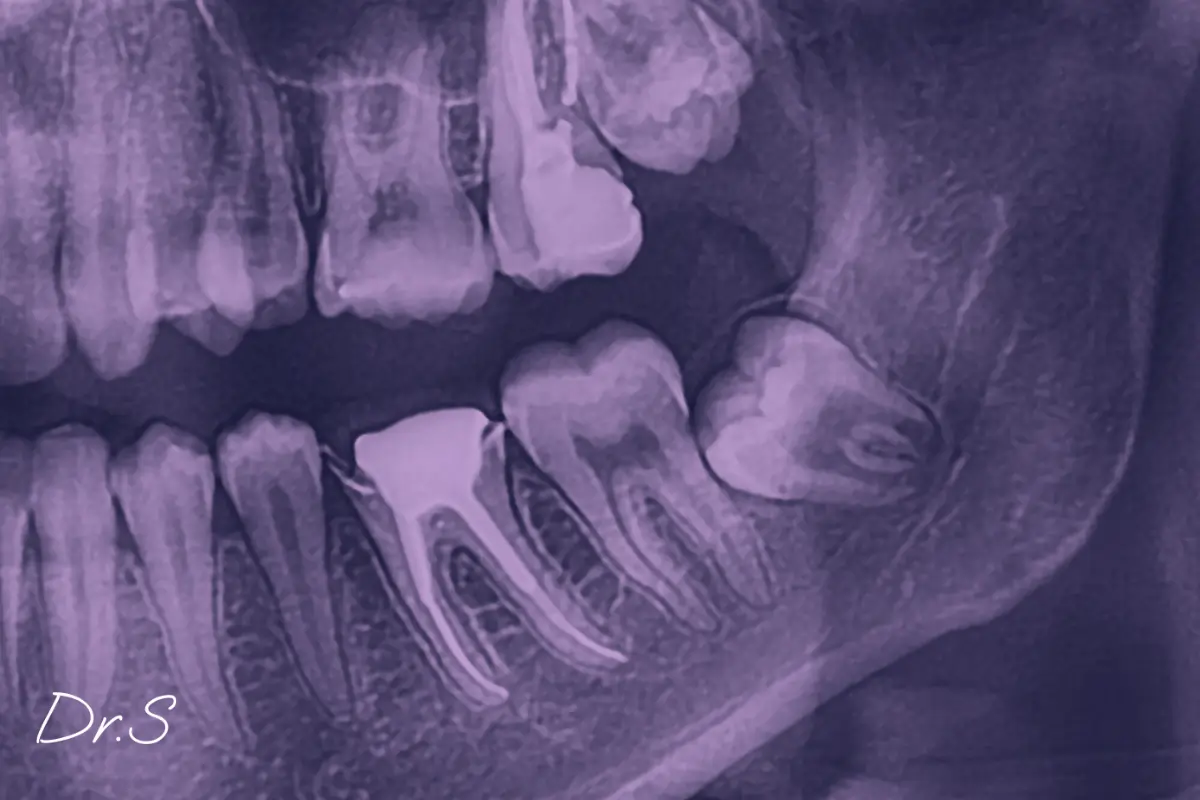
I am Dr Solène Vo Quang, an oral surgeon in Paris, specializing in oral pathologies, tooth extractions of wisdom and 3D imaging for complex diagnosis. In my office at 7 rue Marbeau, I receive many patients faced with a swelling wisdom tooth, often accompanied by pain, difficulty in opening their mouth or chewing normally. Understanding possible causes and knowing when to consult makes all the difference to avoid complications.
What is a swollen wisdom tooth?
Medical definition of swelling
When a wisdom tooth causes swelling, it is actually a localised inflammatory phenomenon. Tissues around the tooth react by dilation of blood vessels, infiltration of immune cells and oedema. It is this process that gives the impression that the gum is "inflated", sensitive, sometimes violacious.
This disorder often manifests when the wisdom tooth begins to pierce, or if it remains partially enclaved under the gum, creating a fragile space between the tooth and surrounding tissues. This area is difficult to clean, making it a frequent entry point for bacteria.
Difference between normal and pathological swelling
A slight swelling during rash of a wisdom tooth may be a normal physiological reaction. It may be enough for a little rest and good hygiene to get things right.
But when inflammation becomes painful, prolonged, or accompanied by other signs such as fever or difficulty swallowing, one must think of an underlying pathology. The most common of these diagnoses is pericoronarite, an acute infection of the tissue surrounding the tooth.
Frequent causes of swelling wisdom tooth
Pericoronarite: often involved
Pericoronarite is at the origin of the majority of the cases of swollen wisdom teeth that I encounter in consultation. It concerns teeth partially removed, stuck under a gum still closed or partially opened.
Bacteria can then accumulate under the small gum cap covering the tooth. This triggers a local infection, sometimes very painful, with swelling, redness, bad breath and sometimes fever.
Other possible sources of swelling
In addition to pericoronarite, other causes may cause swelling around a wisdom tooth. Untreated deep decay, dental abscess, cyst or even local trauma can trigger an inflammatory reaction.
3D imaging can also identify developmental cysts or position anomalies that promote recurrent pain and infection.
Recognizing the symptoms of a swollen wisdom tooth
Pain, fever and inflammation
The most common signs are moderate to intense pain, often pulsatile, swelling of the gum or cheek, and sometimes high body temperature. These symptoms reflect a local inflammatory response or deeper infection.
I pay particular attention to the evolution of symptoms: if the pain becomes constant, if the fever exceeds 38°C, or if the face significantly inflates, rapid management is necessary.
Location of swelling and irradiation
The swelling may be visible outside, in the cheek, or only visible in the mouth. It can spread to the jaw, ear or irradiate to the neck. In some cases, the patients report a blocked ear sensation or discomfort in swallowing or speaking.
These irradiations are not anecdotal. They reflect the proximity between the infected tooth and sensitive nerve or muscle structures, and can guide the diagnosis.
In consultation, I take the time to listen to what you feel and precisely observe your symptoms to make a safe diagnosis.
When to consult for a swollen wisdom tooth
Identify emergency signs
Situations that should prompt you to consult quickly include: swelling that extends to the eye or neck, difficulty swallowing or breathing, persistent fever or a general condition that is altered.
I have sometimes seen patients wait thinking that "it will pass". However, dental infection can evolve rapidly and reach other structures. In doubt, it is better to come to me for a simple and reassuring examination.
Clinical examination and imaging
During the consultation, you first examine your mouth, gum, jaw mobility and general condition. If an infection is suspected, I often indicate an imaging of the panoramic type or 3D scanner, which allows to precisely locate the tooth and evaluate the surrounding structures.
This step is essential to guide treatment, whether it is conservative care or possible extraction.
What treatments for a swollen wisdom tooth?
Medical and local treatment
In moderate cases, I often prescribe anti-inflammatory drugs to reduce pain associated with antiseptic mouthwash. If an infection is present, antibiotic treatment may be necessary, depending on the bacteria involved.
It is important to respect prescribed doses and durations, even if relief is rapid. This avoids relapse or drug resistance.
Surgical extraction: when to use it?
If swelling episodes repeat, if space is too small for the tooth to grow properly, or if complications are visible to imaging, extraction becomes a reasonable option. I take the time to discuss with my patients the benefits and limitations of this procedure.
The act is performed under local anaesthetic, and rigorous planning with 3D imaging minimizes the risks. In my practice, I take care to accompany each patient before, during and after surgery.
Prevent swelling of wisdom teeth
Adopt good oral hygiene
Careful brushing, especially near the wisdom teeth, remains one of the most effective actions to prevent inflammation. Often insists on using a soft toothbrush and dental floss or brushes to clean out hard-to-reach posterior areas.
Regular monitoring consultations
I recommend that adolescents and young adults consult regularly, even in the absence of symptoms. This allows me to observe the evolution of the wisdom teeth, their orientation and the available place in the jaw.
Early follow-up avoids many complications: it can sometimes anticipate an intervention at a more favorable and less painful time.
Post-operative care after treatment
Managing pain and inflammation
After extraction, pain is generally moderate and well controlled by suitable analgesics. I often suggest applying local cold in the first hours and keeping the head slightly raised in the resting position.
Tips for promoting good healing
I advise my patients to prefer a soft diet for a few days, avoid very hot drinks and follow the local care instructions. In case of abnormal bleeding or persistent pain beyond a few days, it is important to contact me again.
Sufficient rest and adequate hygiene generally allow rapid and complete healing.
What is the connection between stress and inflated wisdom tooth?
Stress and decrease of local immunity
Chronic stress affects the immune system, including locally, in oral tissue. I often observed that very stressed patients experienced more recidivism of dental infections or pain related to wisdom teeth.
Comprehensive oral well-being approach
In my approach, I never isolate the mouth of the rest of the body. Good hygiene, a balanced diet, a restful sleep and simple stress management techniques (breathing, physical activity, pause time) can really prevent some inflammatory episodes from recurring.
I sometimes recommend that patients with chronic pain keep a log of their symptoms in order to identify possible links to their general condition or moments of emotional tension.
A swollen wisdom tooth is not just a temporary discomfort. She deserves attention, medical attention, and sometimes prompt action to prevent the situation from getting complicated. Behind this symptom, there is often a mouth that seeks to signal an imbalance, and a patient who deserves to be accompanied rigorously and kindly.
Patient-centred surgery in Paris

I am Dr Solène Vo Quang.
Every day, I explore what AI can bring to care, while remembering that the relationship with each patient remains our first therapeutic tool.
I provide care with rigour and transparency.



FAQ :
Inflated wisdom tooth
Answer your questions
Can a swollen wisdom tooth evolve without visible pain or fever?

Yes, moderate swelling may go unnoticed, especially in cases of localized infection or discrete accumulation of debris under the gum.
Can the wearing of a dental device influence an inflated wisdom tooth?
Indirectly yes
inflated wisdom tooth and headache
In some patients, local inflammation may irradiate to the temples or jaw, causing diffuse pain or headache.
Can an swollen wisdom tooth impact the balance of the oral flora?
Yes, by creating a chronic infectious home, it can unbalance oral bacteria and promote other gingival damage.