
Wisdom Teeth Symptoms: Signs to Recognise and Monitor
Dental thrusts do not always stop in childhood. In adolescence or early adulthood, my patients often encounter a very special situation: that of the wisdom teeth that seek their place. These late teeth, also called third molar teeth, are sometimes asymptomatic, but when they cause pain or infection, it becomes essential to understand the signs.
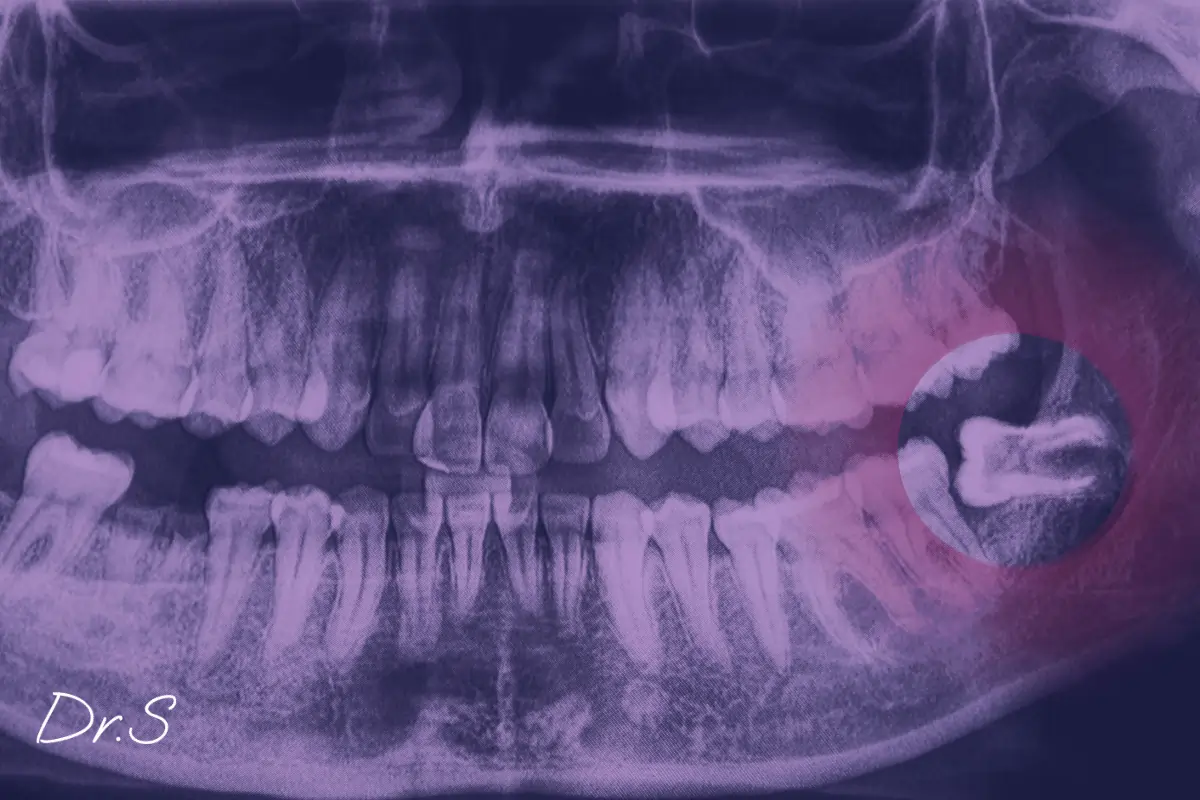
I am Dr Solène Vo Quang, an oral surgeon in Paris, and I regularly receive people who are worried about poorly identified oral symptoms. Pain related to symptomatic wisdom teeth, although common, may go unnoticed or be confused with other disorders. Recognizing them early makes it possible to act accurately and avoid certain avoidable complications.
What are the first symptoms associated with wisdom teeth?
Pain at the back of the jaw
The most common sign of the onset of rash of wisdom teeth is pain located in the bottom of the mouth, often on the side of the lower jaw. This pain can be deaf, sluggish or intermittent, and sometimes intensifyes with chewing or wide mouth opening.
It is usually the movement of the tooth that attempts to pierce the gum or encounters a bone or dental barrier. Pain can irradiate to the ear or throat, making diagnosis more delicate if you do not think directly of a dental cause.
Red and irritated gums
When rash occurs, gingival tissue reacts. The gum can become red, swollen, sensitive, sometimes even form what is called an operculum: a small gum cap that partially covers the emerging tooth.
This area is difficult to clean, which promotes the accumulation of bacteria and increases the risk of infection. My patients often describe a persistent feeling of discomfort, such as pressure accompanied by an discomfort to swallowing.
Frequent infections: recognizing signs
Swelling of the cheek or gum
A wisdom tooth included (which does not come out completely) or semi-inclusive sometimes becomes the focus of a local infection called pericoronarite. This causes inflammation, sometimes intense, with visible swelling of the gum or even the whole cheek on the side concerned.
This type of infection requires special attention. Heat, local redness, increased pain at pressure and the appearance of unpleasant taste are often described during clinical examination.
Fever, bad breath and suppuration
When infection spreads, other warning signs may appear: moderate fever, persistent bad breath, sometimes even purulent discharge (pus) in the gum.
These elements are typical of an infectious bacterial episode and should prompt immediate consultation. Appropriate management prevents infection from gaining deep neck tissue or producing dental abscess.
When a wisdom tooth hurts, it is often the sign that the local balance is broken. Listening to these signals avoids many emergencies.
Atypical symptoms not to be underestimated
Headache, irradiating pain to the ear
Some wisdom tooth symptoms are not immediately located in the mouth. For example, ear, temple or even headache pain may reflect an imbalance in the temporo-mandibular joint (ATM), sometimes caused by the poor position of a wisdom tooth.
When the tooth grows from the cross or exerts lateral pressure, it disturbs the natural alignment of the jaw. A dental imaging, often panoramic or in 3D, allows to direct the diagnosis.
Difficult to open mouth and swollen glands
In more severe forms, some patients develop a trismus, i.e. a painful limitation of mouth opening. This clinical sign may reveal a deep infection that begins to reach the surrounding muscles or fascia.
The presence of swollen and sensitive cervical glands, sometimes associated with general fatigue, reinforces the hypothesis of an evolving infectious picture. In these cases, I recommend rapid consultation, with appropriate treatment and sometimes emergency X-ray.
When to consult urgently for his wisdom teeth?
Warning symptoms not to be ignored
Some signs need to be seen immediately: persistent fever, intense pain that does not give way to pain, marked swelling of the face, or inability to open the mouth properly.
In my practice, I remain particularly attentive when these symptoms associate with each other. Rapid intervention may prevent infection from spreading beyond the oral region.
Urgent extraction: intervention criteria
Surgical intervention can be decided without delay if the tooth poses an immediate danger to adjacent structures or if the infection does not respond well to medical treatment. This may occur in the presence of an emerging abscess or if a nerve is threatened.
It always evaluates the benefits and risks of urgent extraction, taking into account the general state of the patient, possible surgical access and the need for prior antibiotic treatment.
Complications if symptoms are ignored
Dental abscess and deep infections
Untreated infection around a wisdom tooth can evolve to an abscess. It can spread deep into the muscles of the oral floor or into cervical spaces. These situations sometimes require hospitalization, especially if breathing is impaired.
Risks are often underestimated by patients who do not identify their pain as dangerous. The right reflex remains to consult before discomfort becomes urgent.
Pressure on adjacent teeth
A misguided wisdom tooth can also exert progressive pressure on the neighbouring tooth. This can result in displacement, diffuse chronic pain, and even dental root resorption in some rare cases.
This type of complication remains difficult to perceive without a rigorous radio-clinical examination. That's why I often recommend regular monitoring, even in the absence of pain.
Which solutions according to the symptoms observed?
Relief treatments: painkillers, mouth baths
As a first intention, moderate pain can be calmed down by simple treatments: analgesics prescribed according to intensity, antiseptic mouth baths, appropriate hygiene advice. The aim is to reduce local inflammation to better understand the situation.
I always remind my patients that these solutions are temporary. They can stabilize the discomfort, but do not solve root causes if the tooth is mispositioned or infected.
When to consider wisdom tooth removal
Extraction is indicated when there are repeated painful episodes, chronic infection, or risk on adjacent teeth. Some patients, even without discomfort, have included wisdom teeth that can create cysts in the long term.
In these cases, I propose an individual discussion, with a morphological evaluation of each tooth using imaging. The intervention is then planned outside the inflammatory phases, in optimal safety conditions.
Special cases: pregnancy and wisdom teeth
Danger of inflammation during pregnancy
In pregnant women, dental outbreaks may sometimes occur at a time of immune fragility. Active oral infection is never anomaly during pregnancy, as it can in rare cases have an impact on pregnancy.
Chronic gingival inflammation or acute infection can lead to significant general discomfort, sometimes even causing fever or an imbalance in diet.
Precautions and treatments during pregnancy
I always favour a cautious, individualized approach, in collaboration with the obstetrician. Some local treatments are allowed, and antibiotic therapy may be prescribed if necessary, after evaluation of the benefit to the mother and the risk to the foetus.
Extraction is usually delayed after delivery, unless there is a severe infectious threat. My role is then to relieve without harm, preserving at best the physiological balance of the moment.
Patient advice: understanding and preventing complications
Inform and anticipate from adolescence
Follow-up from the age of 16-17 allows you to observe the eruption or position of the wisdom teeth through panoramic x-rays. It is often at this age that I propose a first assessment, even in the absence of symptoms.
To inform young adults and their parents is to allow them to differentiate a simple thrust from a real pathology. A thoughtful decision is made more and more calmly before the onset of pain.
Differentiating a normal outbreak from a pathological problem
A push can cause a simple transient discomfort, quite mild. This must not be alarming. On the other hand, persistent, asymmetric pain, accompanied by visible inflammatory signs or swelling, should awaken your vigilance.
I often recall that a disproportionate pain compared to a normal thrust, or which comes back regularly, deserves a clinical and radiographic evaluation. The decision depends not only on the symptoms, but also on your terrain, background and tolerance.
Identify symptomatic wisdom teeth At the right time, it is to offer the patient a safer, less painful and better controlled path of care.
Patient-centred surgery in Paris

I am Dr Solène Vo Quang.
Every day, I explore what AI can bring to care, while remembering that the relationship with each patient remains our first therapeutic tool.
I provide care with rigour and transparency.



FAQ :
Symptoms of wisdom teeth
Answer your questions
Can a wisdom tooth evolve without causing immediate pain?

Yes, sometimes an included wisdom tooth progresses silently, until it generates lesions or a dental displacement without an initial warning.
Why do we sometimes prefer to watch rather than extract a wisdom tooth?
Each case is unique. If the tooth is stable, asymptomatic, well positioned, surveillance is often preferable to preventive surgery.
Is there a link between wisdom teeth and temporal-mandibular joint disorders?
The connection is complex. Difficult thrust may alter mandibular balance, but is not alone in mechanical or functional disorders.
What particular attention should be given to wisdom teeth in immunocompromised patients?
As the infectious risk is increased, any infection associated with a wisdom tooth warrants rigorous management, sometimes in connection with the reference team.