
Severe Pain From an Emerging Wisdom Tooth
A wisdom tooth that grows can, in some cases, cause unbearable pain.
It's not uncommon, and it's not trivial. This intense pain, often located at the bottom of the mouth, can quickly upset the daily life and cause you to consult urgently.
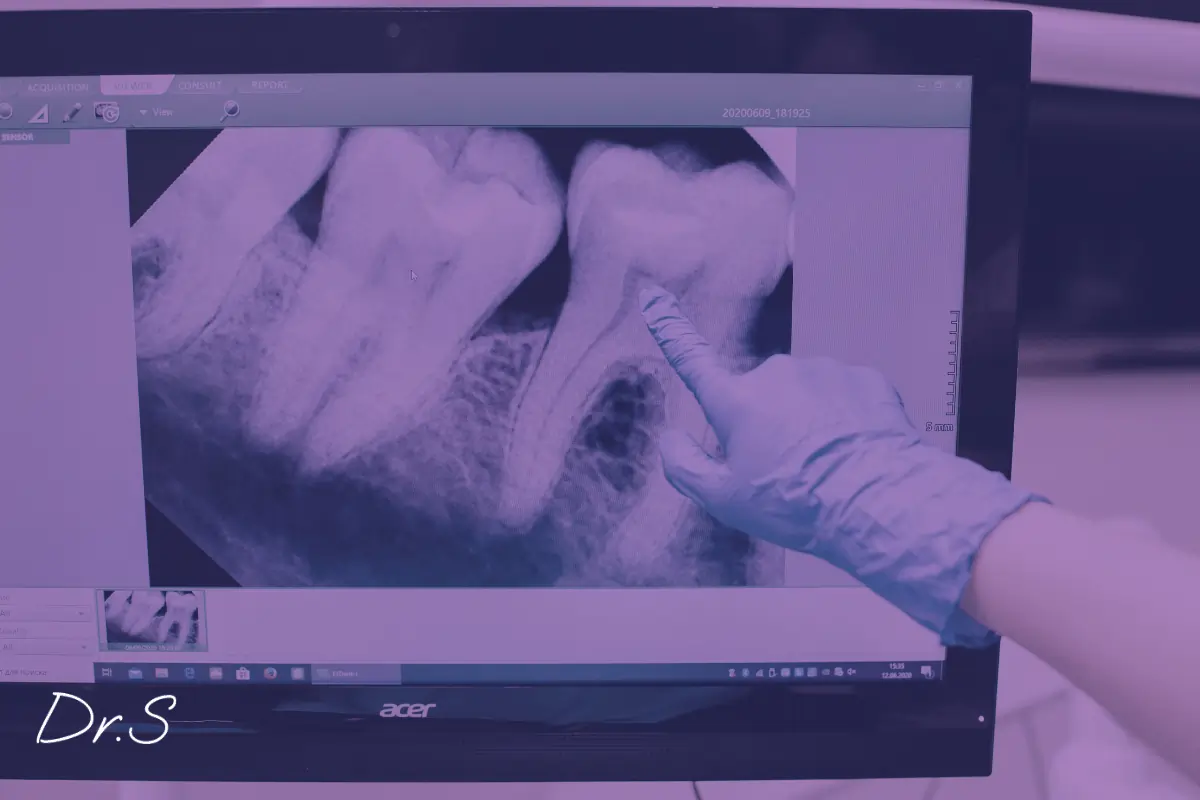
I am Dr. Solène Vo Quang, an oral surgeon in Paris, specializing in medicine and oral surgery. At my office at 7 rue Marbeau, I regularly accompany patients facing a surge of painful, sometimes disabling, teeth.
Understanding the mechanism, recognizing signs and knowing when to act are essential to prevent the situation from getting complicated. In this article, I would like to guide you calmly and clearly, sharing my clinical and human eyes.
How to recognize the signs of a wisdom tooth that grows
Localized pain, swollen gum and other visible signs
When a wisdom tooth begins to pierce, it is common to feel deaf or pulsating pain at the bottom of the jaw. This pain may worsen in the lying position or during chewing.
In the mirror, some patients observe swelling of the gum at the back of the mouth, sometimes red or inflamed. It becomes difficult to open the mouth completely or chew normally, especially if the area is particularly sensitive to the touch.
When discomfort becomes abnormal pain
A temporary discomfort can accompany the thrust without alarming. But when this discomfort intensifies, becomes continuous or accompanied by signs of fever or visible swelling of the face, it deserves medical attention.
The threshold between discomfort and abnormal pain is often crossed without notice. If the pain prevents you from sleeping, eating or concentrating, then consultation becomes indispensable.
Why the pain of wisdom can become unbearable
Aggravating factors: infection, inflammation or bad growth
The pain associated with a wisdom tooth is not always due to the eruption itself. It may result from deep inflammation of tissues, infection such as pericoronarite or growth in a wrong axis, causing pressure on neighbouring teeth or on the bones.
When the tooth does not have enough space to exit properly, it remains partially included in the gum, creating a pocket suitable for infection. This explains why some patients experience atrocious and persistent pain.
When to talk about dental emergency
A wisdom tooth that causes fever, severe swelling of the face, ganglia in the neck or pain irradiating to the ear or throat may reveal a deep infection or even abscess.
In these situations, rapid intervention is essential. Delaying management can lead to local or even general complications, especially if infection spreads.
In my practice, I have found that intense pain associated with a wisdom tooth is never to be trivialized, especially if accompanied by general signs.
Pericoronarite: the typical infection of wisdom teeth
What pericoronarite and why it hurts so much
Pericoronarite refers to inflammation of tissues around a partly out-going wisdom tooth. The gum forms like a small cap on the tooth, under which bacteria accumulate easily.
This often causes lancinating and localized pain, with a high sensitivity to the touch, bad breath and sometimes difficulty opening the mouth (trismus). It can become subacute or chronic if nothing is done.
Symptoms and evolution without adequate treatment
In the absence of care, pericoronarite may worsen. You might notice a red, painful, sometimes purulent gum. The neck glands become sensitive, and the pain can gain a whole half face.
Untreated, this infection can progress to a deep abscess, requiring surgical management and antibiotic treatment. That's why I'm always vigilant when a patient talks about this kind of painting.
Effective solutions to relieve pain quickly
Home remedies and painkillers to know
While waiting for consultation, some measures may temporarily relieve tooth pain of wisdom. Local cold application (in a clean linen), antiseptic mouth bath and suitable analgesics can offer partial relief.
I often recommend that my patients prefer paracetamol at the correct dose as a first step, avoiding aspirin if surgery can be considered. But these are transitional solutions, which do not dispense with clinical evaluation.
When and why consult a dentist without delay
If the pain is severe, lasts more than 48 hours despite pain pain, or if it is accompanied by general symptoms, consult. The examination confirms the cause, assesses the position of the teeth by imaging, and determines whether extraction is necessary.
In my practice, I often use 3D imaging to visualize the tooth axis and surrounding structures. This avoids unnecessary extraction, or on the contrary anticipates it under optimal conditions.
Extraction of a wisdom tooth: when pain becomes chronic
Medical indications for extraction
The extraction of wisdom teeth is not systematic. But when they cause recurrent infections, persistent pain or dental congestion, the indication is given in the interest of the patient.
I always take the time to explain the benefits but also the limitations of this intervention. The aim is not only to remove a tooth, but to relieve it sustainably, reducing the risk of recurrence.
Surgical procedure and post-op follow-up
The procedure can be performed under local anaesthesia in the majority of cases. Once the tooth is removed, precise postoperative instructions are given to limit swelling, inflammation and bleeding.
The suites are usually simple, but temporary tobacco removal, adequate oral hygiene and rest are essential. I remain systematically available for follow-up, in case of concern or complication.
Preventing complications and anticipating pain from adolescence
Watch the rash from adolescence with your dentist
It is possible, and even desirable, to follow the evolution of wisdom teeth as early as teens. A panoramic X-ray can be used to observe the direction of shoot, the available space and any anomalies of formation.
This helps to avoid painful outbreaks or emergency extractions in adulthood. By talking to your dentist or oral surgeon, you can anticipate and choose the right time to intervene if needed.
Targeted oral hygiene to limit inflammation
The wisdom teeth, located at the bottom of the mouth, are difficult to clean properly. Brushing should therefore be treated particularly in this area to avoid infection.
I often advise my patients to use a small headbrush, or interdentary brushes, to reach these areas. In case of doubt or discomfort, a simple professional cleaning can already relieve and prevent an emerging inflammation.
Real pain or amplified by stress?
How to assess the level of pain objectively
The perception of pain is eminently personal. In my office, I always take the time to question the patient's feelings, but also objectify the signs: fever, trismus, swelling, etc.
Simple tools make it possible to assess the impact of pain on your daily life. This helps to adjust the treatment, and sometimes reassure when no sign of severity is found.
Stress, fatigue and perception: aggravating factors
Stress and fatigue often amplify painful perception. A tooth that would be bearable in a soothing context can become unbearable during a period of tension.
It is not a matter of imagining pain, but of admitting that our body and our feelings are connected. Good information, clear medical follow-up and a relationship of trust help mitigate this subjective part.
Conclusion
Faced with a painful wisdom tooth, it is better to act early. Understanding the origin of the pain, recognizing signs of severity and consulting as soon as necessary avoids complications and regains lasting comfort.
Patient-centred surgery in Paris

I am Dr Solène Vo Quang.
Every day, I explore what AI can bring to care, while remembering that the relationship with each patient remains our first therapeutic tool.
I provide care with rigour and transparency.



FAQ
Pain and Tooths of Wisdom
Answer your questions
Can a wisdom tooth cause trouble beyond local pain?

Yes, irradiated pains to the ear, throat or temple are common, in connection with shared innervation of the oral area.
Why are certain pains associated with wisdom teeth more intense at night?
Absence of stimulation and elongation enhance painful perception, especially in the presence of unrelieved infection or inflammation.
Can a wisdom tooth that grows affect posture or cause migraines?
In some cases, a bad rash axis creates mandible muscle tensions that can radiate to the neck or trigger headaches.
How to distinguish unbearable pain from a clinical warning signal?
Pain that prevents food, is accompanied by fever or rapid swelling requires a rapid assessment to prevent any severe infection.