
Sleep Apnea: Getting Tested, and What Comes After

You get enough sleep, but you’re exhausted. What if it were sleep apnea?
Loud snoring, fatigue that persists despite eight hours of sleep, and breathing pauses noticed by someone close to you: these signs often suggest sleep apnea, a common but widely underdiagnosed condition.
In Paris, Dr Solène Vo Quang supports patients through this process: understanding your symptoms, directing you to the right sleep tests, then assessing the most appropriate treatment with you.
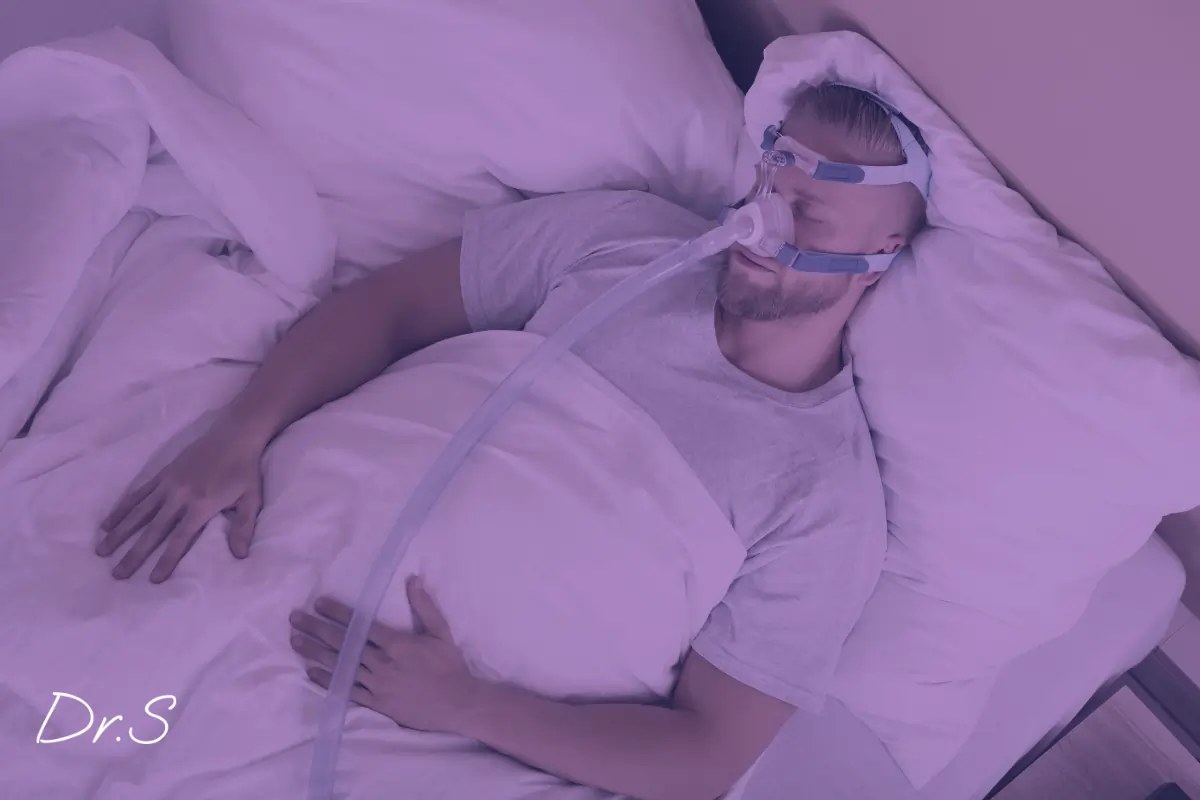
When sleep leaves you exhausted instead of restoring you
During the night, the muscles of the upper airways relax and briefly close repeatedly. Each breathing pause triggers a micro-awakening that you do not remember, but which fragments your sleep and deprives your body of the oxygen it needs to recover.
The snoring that stops
Loud, irregular snoring, sometimes followed by worrying silences. It is often your partner who notices it first. These silences are breathing pauses: the sign most suggestive of sleep apnea.
Fatigue that sets in
You sleep seven to eight hours yet wake up exhausted. Headaches on waking, drowsiness in meetings, heavy eyelids at the wheel: this is not a lack of willpower; it is sleep fragmented night after night.
Night-time awakenings
Waking suddenly with a choking sensation, night sweats and a frequent need to urinate. Your body goes on alert with each breathing pause, even though you do not remember it in the morning.
Invisible signs
Irritability, reduced concentration, memory problems and a low mood: these daytime effects often go unnoticed, but they improve markedly with appropriate care.
Sleep apnea is often first noticed because of a very concrete detail: snoring that worries a loved one, fatigue that does not go away, or startling awakenings that one gradually comes to take for granted. I am Dr Solène Vo Quang, an oral surgeon in Paris, at 7 rue Marbeau. My role includes referral, oral assessment and discussion of an oral appliance when this sleep disorder is suspected.
My aim here is to help you understand the signs, diagnosis and possible treatments, without dramatising or oversimplifying. Several approaches are available, each with their merits, and the right decision always depends on your personal situation.
What is sleep apnea?
Sleep apnea is a breathing disorder in which breathing stops at times or repeatedly becomes shallower during the night. In the most common form, OSAHS (obstructive sleep apnea-hypopnea syndrome), airflow through the upper airways is partly or completely blocked.
This is often caused by relaxation of the tissues of the pharynx, the area at the back of the throat. When air passes through less easily, snoring occurs and may sometimes be followed by a pause in breathing. The brain responds with very brief, often unremembered awakenings to restart breathing.
Apnea, hypopnea, micro-awakening: terms to understand
An apnea is when breathing stops for more than 10 seconds, sometimes much longer. A hypopnea is a reduction in airflow without a complete stop, but it may affect oxygenation and sleep quality.
A micro-awakening is a brief reaction of the brain. You generally do not remember it, but repeated micro-awakenings fragment sleep and explain significant fatigue despite what seems like a long night's sleep.
Obstructive and central sleep apnea: an important distinction
Obstructive sleep apnea is linked to a mechanical obstruction to airflow, most often in the pharynx. In this setting, assessment of the mouth, jaw and occlusion is particularly relevant when considering an oral appliance.
Central sleep apnea is different: it concerns how the nervous system controls breathing. It requires specific medical assessment, and management is not limited to an oral device.
Sleep apnea: symptoms that should prompt attention
Patients often ask me how to tell whether they have sleep apnea. A single symptom is not enough, but a combination of signs should prompt a consultation, especially when relatives observe pauses in breathing.
This concern is entirely understandable: you sense that something is wrong without knowing whether it relates to stress, age or a genuine breathing disorder.
Signs observed at night
At night, the most suggestive signs are worth listing clearly. Here are the ones to mention during a consultation:
- Loud, regular snoring
- Pauses in breathing observed by a loved one
- Repeated startling awakenings
- Unusual night sweats
- Frequent urge to urinate at night
The person who shares your bedroom often plays an essential role. Their account does not replace an examination, but it provides information that you cannot notice on your own.
I always take seriously what a loved one observes while you sleep.
Signs felt during the day
During the day, sleepiness is an important sign: dozing off in front of a screen, in a meeting or on public transport. Fatigue, morning headaches, concentration or memory problems may also be part of the picture.
Some patients describe irritability that feels unlike them, or a more depressed mood. These signs are not specific, but when associated with snoring and pauses in breathing, they warrant medical advice.
Causes and risk factors for sleep apnea
There is rarely a single cause. In my practice, I take care not to reduce a person to their weight, age or lifestyle. These factors may increase the likelihood of the disorder, but they do not sum up either your history or the management needed.
Being overweight, age, certain family histories, alcohol, tobacco, certain medicines or sleeping on the back can encourage narrowing of the airways. People who are not overweight can also have sleep apnea, particularly for anatomical reasons.
Why the airways close during sleep
During sleep, the muscles relax. In some people, this relaxation narrows airflow through the pharynx too much, rather like a corridor whose walls move closer together. If the passage narrows further, breathing decreases or stops; the brain then triggers a micro-awakening to restore airflow.
Weight, alcohol, tobacco, sleep position: possible levers
Several everyday adjustments may be discussed as useful measures. I often recommend that my patients note their sleep schedules, usual position, awakenings and comments from those around them for two weeks before the consultation.
These measures do not systematically replace medical treatment. They form part of an overall approach, especially when a sleep recording confirms a significant breathing disorder.
When should you seek advice, and how is sleep apnea diagnosed?
Seeking advice is reasonable when snoring is significant, pauses in breathing are observed, or fatigue affects your daily life. Diagnosis is based not only on what you feel, but also on a sleep recording.
The care pathway often begins with your GP and may then involve a sleep specialist. My role is referral, oral assessment and discussion of a mandibular advancement device when that option is being considered.
Polygraphy or polysomnography: what are these tests for?
A overnight respiratory polygraphy is a recording focused on breathing, often carried out at home. It measures breathing parameters and oxygenation during the night.
A polysomnography is more comprehensive and is often performed in a sleep centre. It examines more parameters, which is useful when diagnosis is complex or other associated disorders are present.
How do you fit the device used to test for sleep apnea?
This is a common and entirely legitimate question. The device should be fitted according to the instructions of the medical team or provider, with respiratory sensors and oxygen measurement. I always recommend asking for a demonstration if anything is unclear. Do not alter the set-up on your own: recording quality determines how reliable the result will be.
Understanding the AHI without getting lost in the numbers
The AHI (apnea-hypopnea index) is the number of breathing events per hour of sleep. It helps classify the severity of the disorder. The usual reference points are: 5 to 14 for mild sleep apnea, 15 to 30 for moderate sleep apnea, and above 30 for severe sleep apnea. These thresholds may vary according to the framework used, and interpretation always takes symptoms and medical context into account.
Sleep apnea treatment: CPAP, oral appliance and everyday measures
Treatment is not simply a matter of automatically choosing a device. The decision depends on severity, your symptoms, your tolerance and what is realistic in your everyday life.
CPAP is often preferred for severe sleep apnea and some moderate forms. A mandibular advancement device may be offered for certain patient profiles or when CPAP is poorly tolerated, after medical and oral assessment.
CPAP: understanding the device and mask
Continuous positive airway pressure (CPAP) delivers air through a mask to keep the airways open during the night. Getting used to it may take time. Mask comfort, dryness or discomfort at night should be discussed with the follow-up team, without giving up too quickly or feeling guilty.
Mandibular advancement device: an option to assess case by case
A mandibular advancement device (MAD) is worn in the mouth and moves the lower jaw slightly forward to help air pass through. It is not a universal solution, but it may be relevant for some patients. Whether it is indicated depends on several factors:
- AHI value and symptom severity
- Cardiovascular context
- Condition of the teeth and gums
- Health of the jaw joint
- Likely tolerance of the device
My role is to assess the mouth, occlusion and functional constraints, then coordinate the discussion with the sleep specialist.
Associated measures: weight, physical activity and sleep position
Everyday measures still have a real role when relevant: weight loss when indicated, physical activity, reducing tobacco and alcohol, and a preference for sleeping on one's side. They may improve respiratory factors and sleep quality.
I present them as support, not as a substitute for CPAP or a MAD. Sleep apnea illustrates the need to link breathing, metabolism, alertness and quality of life in coherent care.
Risks, life expectancy and everyday safety
Questions about life expectancy or the risk of dying in one's sleep reflect a concern I fully understand. Sleep apnea should not be approached as an immediate fear, but as a disorder that can have real health consequences if it is neither diagnosed nor monitored.
It is associated with cardiovascular and metabolic risks, whose extent depends on each patient's medical context. This justifies appropriate diagnosis and follow-up, particularly where high blood pressure, type 2 diabetes or cardiovascular history are present.
Can sleep apnea be fatal?
I prefer to answer calmly: the main issue is not to live in fear of a sudden event at night. The issue is to recognise a disorder which, if it persists, may affect quality of life, memory and concentration, and may be associated with complications depending on the medical context.
The right approach is to seek advice when signs are present. An accurate diagnosis helps remove uncertainty and makes it possible to discuss proportionate care.
Sleepiness, driving and alertness: an often underestimated issue
Daytime sleepiness is not merely an inconvenience. It can become a safety issue when driving, at work or in any situation requiring sustained alertness. If you fall asleep involuntarily or have difficulty staying awake in unusual circumstances, speak to a doctor. It is important to name this without shame, because it can change how urgently assessment is needed.
Care to build together
Sleep apnea rarely calls for a single answer. Management is built on your account, observations from those around you, the sleep recording, the AHI, your symptoms and your tolerance of treatment.
In this approach, I place great importance on diagnostic accuracy and coordination between the different professionals involved. Depending on the situation, the GP, sleep specialist and oral surgeon each have a clearly defined role.
The role of the oral surgeon in referral and oral appliances
As an oral surgeon, I can identify certain anatomical or functional factors, assess oral health and discuss the feasibility of a mandibular advancement device. This assessment covers the teeth, gums, jaw, occlusion and likely tolerance of the device.
I do not present an oral appliance as an automatic answer, but as an option to integrate into a coordinated care pathway, with the person at its centre. If you recognise several of these signs in everyday life, a good first step is to discuss them during a consultation. If necessary, we can arrange a sleep assessment and then discuss possible options together, without rushing.
What you need to know
Four points to help you move forward calmly, from the first sign to the right treatment
Recognising the signs
Snoring, persistent fatigue and breathing pauses observed by someone close to you: these signs warrant medical advice.
Confirming the diagnosis
Polygraphy or polysomnography: an objective sleep recording measures severity beyond the symptoms you feel.
Choosing treatment
CPAP, a mandibular advancement device and everyday measures: the decision depends on severity, the person’s profile and tolerance.
Moving forward together
General practitioner, sleep specialist, oral surgeon: a coordinated care pathway tailored to you.
Our sleep apnea guides
Each situation has its own page. Find the one that matches yours.
Understanding
Diagnosis
Treatments
BOOK AN APPOINTMENT
Book an appointment with a stomatologist in Paris
A stomatologist assesses conditions that may require specialist care, including oral surgery, lesions of the mouth or tongue, sleep apnoea and complex wisdom teeth. This first consultation helps establish what is happening and discuss the next steps before any treatment decision.
We listen to you
Tell us about your pain, discomfort, concerns about a lesion or difficulty sleeping. You can raise any question during the consultation.
We examine the problem
A clinical examination, with imaging if needed, helps assess your situation.
A clear plan to take home
You leave with an explanation of the findings and, where appropriate, a treatment plan and written estimate. You can take time to consider the proposed care.
Choose an appointment
Appointments via Doctolib
FAQ
Sleep apnea
We answer your questions

A consultation is useful if these signs recur or are associated with drowsiness. Diagnosis is not based on symptoms alone; it also relies on a sleep recording and an assessment of the medical context.
Polygraphy mainly records breathing and oxygenation, often at home. Polysomnography is more comprehensive and is often performed in a sleep centre. The choice depends on the signs, the context and local organisation.
AHI estimates the number of respiratory events per hour. It helps classify severity, but thresholds may vary depending on the framework. Interpretation also takes account of symptoms and the medical context.
Discomfort with CPAP should be reported to the follow-up team before stopping treatment. The type of mask, its fit, dryness and night-time tolerance can often be reassessed to improve adherence.
CPAP is often preferred for severe forms. A mandibular advancement device may be offered for certain profiles or if CPAP is poorly tolerated, after a medical and oral assessment of the jaw, occlusion and tolerance.
These observations matter because the person affected does not always notice their own breathing pauses. Writing them down, together with associated fatigue or drowsiness, helps prepare for a consultation and a possible sleep study.
Marked drowsiness can affect alertness, concentration and safety, especially when driving or working in a safety-critical role. If you fall asleep unintentionally, prompt medical advice is recommended.
Obstructive sleep apnea is linked to a blockage in the upper airway. Central sleep apnea concerns the control of breathing. Treatment can therefore differ and needs a specific medical assessment.